WhatsApp Chat

salesforce consulting services

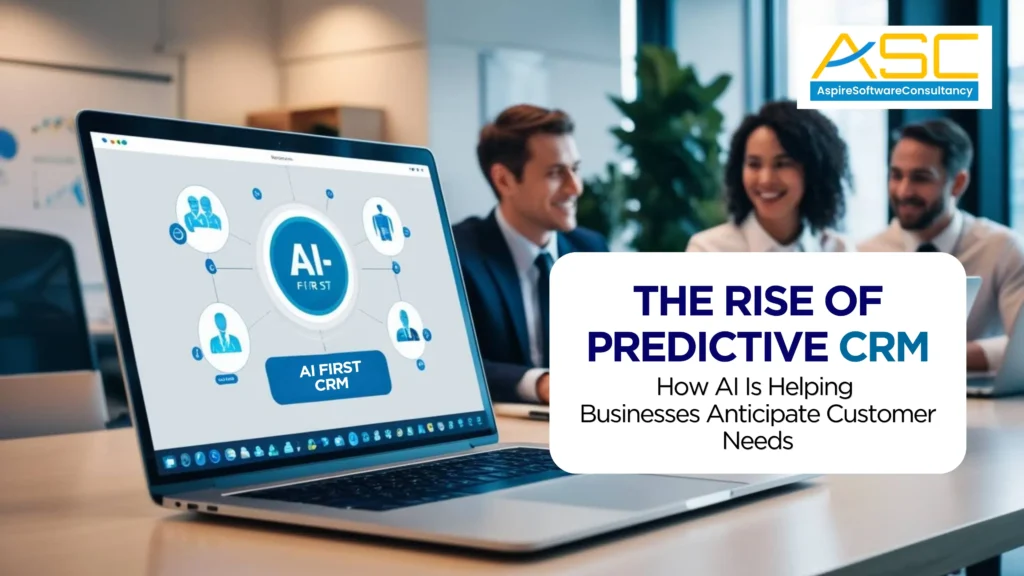
Predictive CRM dashboard with AI analytics helping businesses understand customer behavior and improve engagement

The Rise of Predictive CRM: How AI Is Helping Businesses Anticipate Customer Needs

In today’s fast moving digital economy, customer expectations are evolving faster than ever. Businesses are no longer competing only on product quality or pricing — they are competing on customer experience. Companies that can understand customer behavior, predict future needs, and deliver personalized interactions are gaining a significant competitive advantage. This is where predictive CRM powered by artificial intelligence is transforming modern business operations. Traditional CRM systems primarily focus on storing customer information and tracking interactions. However, modern businesses require more than just data storage. They need actionable insights that help sales, marketing, and customer support teams make smarter decisions in real time. With the rise of ai powered crm solutions, organizations can now forecast customer behavior, identify sales opportunities, reduce churn, and create highly personalized customer experiences. At Aspire Software Consultancy, we help businesses leverage advanced CRM technologies through expert salesforce consulting services, intelligent automation, and custom AI integrations that improve customer engagement and business performance. What Is Predictive CRM? Predictive CRM is an advanced approach to customer relationship management that uses artificial intelligence, machine learning, and analytics to predict customer actions and behaviors. Instead of simply reacting to customer activity, businesses can proactively anticipate what customers may need next. Predictive CRM systems analyze historical customer data, purchasing patterns, communication history, browsing activity, and engagement metrics to generate intelligent recommendations and forecasts. For example, predictive CRM can help businesses: Identify customers most likely to make a purchase Detect customers at risk of leaving Recommend personalized products or services Predict future sales trends Automate lead scoring and prioritization Improve customer retention strategies This intelligent use of data enables businesses to create more meaningful and personalized customer interactions. How AI Is Transforming CRM Systems Artificial intelligence is becoming a core component of modern CRM platforms. AI driven automation and analytics are helping organizations improve efficiency while delivering exceptional customer experiences. 1. Smarter Lead Scoring Sales teams often spend valuable time pursuing leads that may never convert. AI powered CRM systems automatically analyze customer behavior and assign lead scores based on conversion probability. This allows sales teams to focus on high value opportunities, improving productivity and revenue generation. A trusted salesforce crm development company can customize AI based lead scoring models according to business specific goals and customer data. 2. Personalized Customer Experiences Modern customers expect personalized interactions across every touchpoint. AI helps businesses understand customer preferences, interests, and buying behaviors to deliver targeted recommendations and communications. Using predictive analytics, businesses can send personalized product suggestions, customized offers, and timely follow ups that increase engagement and customer satisfaction. This is one of the biggest reasons companies are investing in customer intelligence platforms integrated with CRM systems. 3. Predicting Customer Churn Customer retention is often more cost effective than acquiring new customers. Predictive CRM tools can identify warning signs that indicate a customer may stop engaging with a business. AI algorithms analyze factors such as declining engagement, reduced purchases, support complaints, or inactivity to predict churn risks early. Businesses can then take proactive steps to improve customer relationships and prevent revenue loss. 4. Intelligent Sales Forecasting AI powered forecasting tools help organizations make data driven business decisions. By analyzing market trends, historical sales performance, and customer behavior, predictive CRM systems provide more accurate revenue predictions. This enables businesses to improve planning, resource allocation, and strategic decision making. Why Salesforce Is Leading the Predictive CRM Revolution Salesforce remains one of the most powerful CRM platforms for businesses seeking AI driven customer management solutions. With tools like Salesforce Einstein, businesses can integrate predictive analytics, automation, and AI powered insights directly into their workflows. As a professional salesforce development company, Aspire Software Consultancy helps businesses maximize the capabilities of Salesforce through tailored implementation and customization services. Our salesforce consulting services help organizations: Implement intelligent CRM workflows Build AI powered dashboards and reporting Automate customer engagement processes Improve sales and marketing alignment Integrate third party applications and data sources Develop scalable CRM ecosystems With the right CRM strategy, businesses can transform customer data into actionable intelligence that drives growth. The Importance of Salesforce Customization Every business has unique workflows, customer journeys, and operational requirements. A generic CRM setup often fails to meet industry specific needs. This is why salesforce customization services play a critical role in CRM success. Customized CRM solutions allow businesses to: Create tailored dashboards and reporting Automate repetitive business processes Improve team collaboration Enhance customer communication workflows Integrate AI models for predictive insights Build industry specific CRM modules A reliable salesforce crm development company can ensure that CRM platforms align perfectly with business goals while maintaining scalability and flexibility. Industries Benefiting from Predictive CRM Predictive CRM solutions are transforming industries across the globe. Businesses in multiple sectors are leveraging AI powered insights to improve customer relationships and operational efficiency. Retail and E commerce Retail businesses use predictive CRM to recommend products, personalize promotions, and forecast purchasing behavior. Healthcare Healthcare providers use predictive analytics to improve patient engagement, appointment scheduling, and communication workflows. Financial Services Banks and financial institutions use AI driven CRM systems to detect fraud risks, personalize financial products, and improve customer retention. Real Estate Real estate companies use predictive CRM to identify high potential leads and automate follow up communication. Travel and Hospitality Hospitality businesses use customer intelligence platforms to personalize guest experiences and improve loyalty programs. The Future of AI Powered CRM Solutions The future of CRM is becoming increasingly intelligent, automated, and customer centric. Businesses are moving toward systems that can predict customer needs before customers even express them. Emerging trends in predictive CRM include: Conversational AI and chatbots Real time customer sentiment analysis Hyper personalized marketing automation Voice enabled CRM interactions Predictive customer support AI driven workflow automation As AI technology continues to evolve, businesses that adopt predictive CRM early will gain a stronger competitive advantage in customer engagement and operational efficiency. Why Choose Aspire Software Consultancy At Aspire Software Consultancy, we specialize in delivering innovative CRM and AI solutions that help businesses improve customer experiences and drive

The Rise of Predictive CRM: How AI Is Helping Businesses Anticipate Customer Needs Read More »

Aspire Software Consultancy AI Salesforce and custom software solutions

Why Businesses Choose Aspire Software Consultancy for AI, Salesforce, and Custom Software Solutions

In today’s fast-paced digital landscape, businesses must adopt innovative technologies to stay competitive. From AI-driven automation to seamless CRM systems and scalable applications, organizations are constantly seeking reliable partners who can turn their vision into reality. This is where Aspire Software Consultancy stands out as a trusted software development consultancy helping businesses accelerate growth through intelligent solutions. Understanding the Modern Business Needs Modern enterprises require more than just basic IT support. They need strategic guidance, scalable systems, and integrated platforms that align with their business goals. Whether it’s implementing AI solutions, optimizing CRM processes, or building custom applications, choosing the right IT consulting company plays a crucial role. Aspire Software Consultancy bridges this gap by offering end-to-end software consulting services that combine technical expertise with industry insights. Expertise in AI-Driven Solutions Artificial Intelligence is no longer optional—it’s a necessity for businesses aiming to improve efficiency and decision-making. Aspire Software Consultancy helps organizations leverage AI for: Process automation Predictive analytics Customer behavior insights Intelligent workflows Unlike generic providers, Aspire focuses on tailored AI strategies that align with business objectives. Their approach ensures companies gain measurable ROI rather than just adopting technology for the sake of it. Strong Capabilities in Salesforce Solutions Salesforce remains one of the most powerful CRM platforms, but its true potential can only be unlocked with expert implementation. As a reliable provider of Salesforce consulting services, Aspire Software Consultancy helps businesses: Customize Salesforce based on their workflow Integrate Salesforce with other enterprise systems Automate sales, marketing, and customer support processes Improve customer engagement and retention Being a trusted Salesforce development company, Aspire ensures seamless CRM implementation that enhances productivity and drives business growth. Custom Software Development for Unique Business Needs Every business has unique challenges that off-the-shelf solutions cannot fully address. This is where Aspire excels as a custom software development company. Their team builds scalable, secure, and high-performance applications tailored to specific requirements. Whether it’s a startup looking for an MVP or an enterprise needing complex platforms, Aspire delivers solutions that grow with your business. Key benefits of their custom development approach include: Personalized functionality Improved operational efficiency Better data management Enhanced user experience End-to-End Enterprise Application Development Digital transformation often requires robust systems that integrate various business functions. Aspire specializes in enterprise application development, enabling organizations to streamline operations and improve collaboration across departments. From ERP systems to cloud-based platforms, Aspire ensures: Seamless integration between applications Scalable architecture for future growth High-level data security Real-time insights for better decision-making Their expertise allows businesses to eliminate silos and achieve operational excellence. A Strategic Approach to IT Consulting What sets Aspire apart from other service providers is its strategic approach. As a forward-thinking IT consulting company, they don’t just deliver solutions—they align technology with business goals. Their consulting process includes: Understanding business challenges Identifying the right technology stack Designing scalable solutions Ensuring smooth implementation Providing continuous support and optimization This holistic approach ensures long-term success rather than short-term fixes. Focus on Quality, Innovation, and Scalability Businesses choose Aspire Software Consultancy because of its commitment to: Quality: Delivering reliable and high-performing solutions Innovation: Leveraging the latest technologies like AI and automation Scalability: Building systems that grow with business needs Their agile development methodology ensures faster delivery without compromising quality, making them a preferred software consulting services provider. Client-Centric Approach Aspire believes in building long-term partnerships rather than one-time transactions. Their client-first approach includes: Transparent communication Regular project updates Customized solutions Dedicated support teams This level of commitment helps businesses feel confident in their technology investments. Proven Track Record Across Industries Aspire Software Consultancy has successfully delivered solutions across multiple industries, including: Healthcare Finance Retail Manufacturing Technology Their cross-industry experience allows them to understand unique challenges and provide solutions that deliver real business value. Why Aspire Software Consultancy is the Right Choice To summarize, businesses choose Aspire because they offer: Comprehensive software development consultancy services Expertise in AI and automation Reliable Salesforce consulting services and development Tailored solutions as a custom software development company Advanced enterprise application development capabilities Strategic guidance from an experienced IT consulting company With a strong focus on innovation, scalability, and client success, Aspire Software Consultancy empowers businesses to achieve digital transformation effectively. Frequently Asked Questions What does a software development consultancy do? A software development consultancy helps businesses design, develop, and implement technology solutions tailored to their specific needs, ensuring scalability and efficiency. Why should businesses invest in Salesforce consulting services? Salesforce consulting services help organizations customize and optimize their CRM, improving customer relationships, sales processes, and overall productivity. How does custom software development benefit businesses? Custom software provides tailored solutions, improves operational efficiency, and offers better scalability compared to off-the-shelf applications. What industries benefit from enterprise application development? Industries like healthcare, finance, retail, and manufacturing benefit from enterprise applications by improving workflows, data management, and decision-making. How can AI solutions improve business operations? AI helps automate repetitive tasks, provides predictive insights, enhances customer experience, and enables smarter decision-making. Facebook Instagram Youtube Linkedin X-twitter

Why Businesses Choose Aspire Software Consultancy for AI, Salesforce, and Custom Software Solutions Read More »

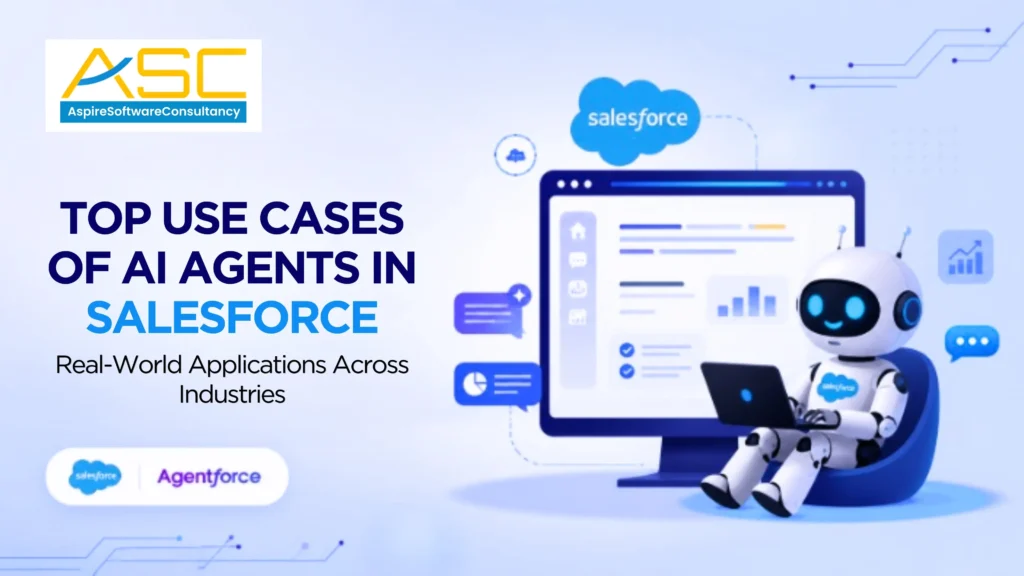
AI agents use cases in Salesforce across industries including sales automation, customer support, marketing, and CRM integration

Top Use Cases of AI Agents in Salesforce: Real-World Applications Across Industries

In today’s fast-moving digital landscape, businesses are under constant pressure to deliver faster, smarter, and more personalized experiences. This is where AI agents in Salesforce are transforming how organizations operate. By combining automation, intelligence, and real-time data insights, AI agents are enabling businesses to move beyond traditional CRM usage and unlock true operational efficiency. At Aspire Software Consultancy, we help organizations implement advanced salesforce consulting services that leverage AI-driven workflows to streamline processes, improve decision-making, and enhance customer engagement. Let’s explore the top AI agents use cases in Salesforce and how they are driving real-world impact across industries. What Are AI Agents in Salesforce? AI agents in Salesforce are intelligent systems that can autonomously perform tasks, analyze data, and make decisions with minimal human intervention. Powered by technologies like machine learning and predictive analytics, these agents enhance salesforce automation use cases by making processes smarter and more adaptive. From handling customer queries to predicting sales opportunities, AI agents are reshaping how businesses use CRM platforms. 1. Intelligent Sales Automation One of the most impactful salesforce automation use cases is in sales processes. AI agents help sales teams: Automatically prioritize leads based on conversion probability Predict customer buying behavior Recommend next best actions for sales reps This reduces manual effort and allows teams to focus on high-value opportunities. A reliable salesforce development company can customize these AI capabilities to align with your sales workflows. 2. AI-Powered Customer Support Customer expectations are higher than ever, and AI agents play a key role in meeting them. In customer service, AI agents can: Provide instant responses via chatbots Automatically categorize and route support tickets Suggest solutions based on historical cases With the help of salesforce customization services, businesses can build intelligent support systems that deliver faster resolution times and improved customer satisfaction. 3. Smart Marketing Automation AI agents are revolutionizing marketing by enabling hyper-personalization. Businesses can: Segment audiences dynamically Predict campaign performance Automate email journeys based on user behavior When integrated with salesforce crm integration services, marketing teams gain a unified view of customer data, ensuring more targeted and effective campaigns. 4. Predictive Analytics for Better Decision-Making AI agents analyze vast amounts of CRM data to provide actionable insights. This helps businesses: Forecast sales trends Identify potential risks Optimize resource allocation Using advanced salesforce integration services, companies can connect multiple data sources, allowing AI agents to deliver more accurate predictions. 5. Automated Workflow Management Manual workflows often slow down operations and increase errors. AI agents streamline workflows by: Automating approvals and task assignments Triggering actions based on predefined conditions Reducing dependency on manual intervention This is one of the most practical ai agents use cases in salesforce, especially for organizations looking to scale operations efficiently. 6. Personalized Customer Experience AI agents enhance customer experience by delivering personalization at scale. They can: Recommend products or services based on user behavior Customize communication across channels Provide real-time engagement insights With the right salesforce consulting services, businesses can implement AI-driven personalization strategies that build stronger customer relationships. 7. Seamless System Integration Many organizations use multiple tools across departments, leading to data silos. AI agents, combined with salesforce integration services, help: Synchronize data across platforms Eliminate inconsistencies Improve cross-team collaboration This ensures that every department works with accurate and up-to-date information. Industry-Wise Applications of AI Agents in Salesforce Healthcare AI agents help manage patient data, automate appointment scheduling, and improve patient engagement through personalized communication. Retail & E-commerce Businesses use AI agents to recommend products, optimize inventory, and enhance customer journeys. Financial Services AI-driven systems detect fraud, assess risk, and provide personalized financial recommendations. Manufacturing AI agents streamline supply chain operations, predict maintenance needs, and optimize production processes. IT & SaaS Organizations leverage AI agents to automate customer onboarding, support, and subscription management. Why Businesses Are Adopting AI Agents in Salesforce The growing adoption of AI in CRM systems is driven by: Increased efficiency through automation Improved accuracy in decision-making Enhanced customer experience Scalable business operations Partnering with an experienced salesforce development company ensures that AI implementations are aligned with your business goals. How Aspire Software Consultancy Can Help At Aspire Software Consultancy, we specialize in delivering end-to-end Salesforce solutions, including: salesforce consulting services tailored to your business needs Advanced salesforce customization services for AI-driven workflows Seamless salesforce crm integration services Scalable salesforce integration services across platforms Our goal is to help businesses unlock the full potential of AI-powered Salesforce solutions. Frequently Asked Questions What are AI agents in Salesforce? AI agents in Salesforce are intelligent tools that automate tasks, analyze data, and improve decision-making within CRM systems. How do AI agents improve Salesforce automation? They enhance automation by making workflows smarter, predictive, and more efficient, reducing manual effort. What industries benefit from AI agents in Salesforce? Industries like healthcare, retail, finance, manufacturing, and IT benefit significantly from AI-driven Salesforce solutions. Are AI agents customizable in Salesforce? Yes, with salesforce customization services, AI agents can be tailored to meet specific business requirements. Why should businesses invest in Salesforce AI solutions? AI solutions improve productivity, enhance customer experience, and enable data-driven decision-making. Facebook Instagram Youtube Linkedin X-twitter

Top Use Cases of AI Agents in Salesforce: Real-World Applications Across Industries Read More »

AI agents in Salesforce automating CRM workflows and improving business operations efficiency

AI Agents in Salesforce: How Autonomous Workflows Are Transforming Business Operations

In today’s fast-paced digital landscape, businesses are constantly looking for smarter ways to improve efficiency, reduce manual effort, and deliver better customer experiences. This is where AI agents in Salesforce are making a powerful impact. By enabling autonomous workflows in CRM, organizations can automate decision-making, streamline processes, and unlock new levels of productivity. At Aspire Software Consultancy, we help businesses leverage cutting-edge innovations like salesforce agentforce implementation to stay ahead in a competitive market. What Are AI Agents in Salesforce? AI agents in Salesforce are intelligent systems designed to perform tasks, make decisions, and interact with data with minimal human intervention. These agents use machine learning, automation, and predictive analytics to execute workflows across various business functions such as sales, customer service, and marketing. Unlike traditional automation, AI agents don’t just follow predefined rules—they learn from data, adapt to changing scenarios, and continuously optimize processes. Understanding Autonomous Workflows in CRM Autonomous workflows in CRM go beyond simple automation. They enable systems to: Analyze real-time data Make intelligent decisions Trigger actions automatically Improve outcomes through continuous learning For example, an AI-powered Salesforce system can automatically assign leads to the most suitable sales representative, predict customer needs, or resolve support queries without human involvement. Key Benefits of AI Agents in Salesforce 1. Enhanced Operational Efficiency AI agents eliminate repetitive manual tasks, allowing teams to focus on strategic activities. Businesses can achieve faster turnaround times and improved productivity. 2. Smarter Decision-Making With real-time insights and predictive analytics, AI agents empower organizations to make data-driven decisions. 3. Improved Customer Experience AI-driven workflows ensure quicker responses, personalized interactions, and consistent service quality. 4. Scalability As your business grows, AI agents can handle increased workloads without additional resource investment. 5. Reduced Errors Automation minimizes human errors, ensuring accuracy in processes such as data entry, reporting, and customer interactions. Real-World Use Cases Sales Automation AI agents can analyze customer behavior, prioritize leads, and recommend the next best action. With proper salesforce customization services, businesses can tailor these capabilities to their specific needs. Customer Support AI-powered chatbots and service agents can resolve common queries, escalate complex issues, and provide 24/7 support. Marketing Automation AI agents can segment audiences, personalize campaigns, and optimize engagement strategies in real time. Workflow Optimization Through salesforce integration services, AI agents can connect with other business systems, ensuring seamless data flow and process automation across departments. Role of Salesforce Agentforce Implementation Implementing AI agents effectively requires expertise and a strategic approach. Salesforce agentforce implementation focuses on integrating AI capabilities within your CRM ecosystem to enable autonomous workflows. At Aspire Software Consultancy, our approach includes: Understanding your business processes Identifying automation opportunities Customizing AI workflows Integrating with existing systems Continuous optimization and support Why Businesses Need Salesforce Consulting Services Adopting AI-driven CRM solutions is not just about technology—it’s about transformation. Professional salesforce consulting services help businesses: Align AI capabilities with business goals Ensure seamless implementation Maximize ROI from Salesforce investments Maintain compliance and data security Working with an experienced salesforce development company ensures that your AI initiatives are scalable, secure, and future-ready. Best Practices for Implementing AI Agents To get the most out of AI agents in Salesforce, businesses should follow these best practices: Define Clear Objectives Identify the specific problems you want to solve with AI-powered automation. Start Small and Scale Begin with a pilot project and gradually expand AI capabilities across departments. Focus on Data Quality AI agents rely on accurate and clean data to deliver meaningful results. Invest in Customization Leverage salesforce customization services to tailor AI workflows to your business needs. Ensure Seamless Integration Use salesforce integration services to connect AI agents with other enterprise systems. Future of AI in Salesforce The future of Salesforce is deeply connected with AI innovation. As technologies evolve, AI agents will become more advanced, capable of handling complex decision-making processes and delivering hyper-personalized customer experiences. Businesses that adopt AI-driven CRM solutions today will gain a significant competitive advantage by improving efficiency, reducing costs, and enhancing customer satisfaction. Why Choose Aspire Software Consultancy? At Aspire Software Consultancy, we specialize in delivering end-to-end Salesforce solutions, including: Salesforce consulting services Salesforce agentforce implementation Salesforce integration services Salesforce customization services Our team ensures that your CRM system evolves into an intelligent, autonomous platform that drives real business growth. Frequently Asked Questions What are AI agents in Salesforce? AI agents are intelligent systems within Salesforce that automate tasks, analyze data, and make decisions to improve business processes. How do autonomous workflows in CRM benefit businesses? They reduce manual effort, improve efficiency, enhance customer experience, and enable data-driven decision-making. What is Salesforce agentforce implementation? It is the process of integrating AI-powered agents into Salesforce to enable autonomous workflows and intelligent automation. Do I need Salesforce consulting services for AI implementation? Yes, professional consulting ensures proper strategy, implementation, and optimization of AI capabilities. Can AI agents be customized for specific business needs? Absolutely. With salesforce customization services, AI workflows can be tailored to match unique business requirements. Facebook Instagram Youtube Linkedin X-twitter

AI Agents in Salesforce: How Autonomous Workflows Are Transforming Business Operations Read More »

How to choose the right Salesforce implementation partner for your business and ensure successful CRM implementation

How to Choose the Right Salesforce Implementation Partner for Your Business

In today’s competitive digital landscape, choosing the right Salesforce implementation partner can make or break your CRM success. Salesforce is a powerful platform, but its true potential is unlocked only when implemented correctly, aligned with your business goals, and customized for your workflows. With so many vendors offering Salesforce implementation services, businesses often struggle to identify the right partner. This guide will help you understand how to choose a Salesforce partner that fits your needs and ensures long-term success. Why Choosing the Right Salesforce Partner Matters A reliable Salesforce consulting partner does more than just deploy software. They: Understand your business processes Customize Salesforce to match your workflows Ensure seamless integration with existing systems Provide ongoing support and optimization A wrong choice, however, can lead to project delays, budget overruns, poor adoption, and limited ROI. Key Factors to Consider When Choosing a Salesforce Implementation Partner 1. Industry Experience and Expertise Not all Salesforce partners are the same. Look for a Salesforce implementation company with proven experience in your industry. For example, if you’re in healthcare, retail, or manufacturing, your partner should understand industry-specific challenges and compliance requirements. What to check: Past projects and case studies Industry-specific solutions Client testimonials 2. Salesforce Certifications and Credentials A credible Salesforce consulting partner should have certified professionals on their team. Certifications validate technical expertise and ensure that the partner follows Salesforce best practices. Look for: Salesforce Certified Administrators Salesforce Developers Salesforce Consultants When you hire Salesforce consultants, certifications are a strong indicator of quality and reliability. 3. Customization and Scalability Capabilities Your business is unique, and your CRM should reflect that. Avoid partners who offer one-size-fits-all solutions. The right Salesforce implementation partner will: Customize workflows Build automation Scale the solution as your business grows This ensures that your Salesforce setup evolves with your business needs. 4. Integration Expertise Modern businesses rely on multiple systems such as ERP, marketing tools, and analytics platforms. An experienced provider of Salesforce implementation services should have strong expertise in: API integrations Third-party tools Data migration Seamless integration ensures a unified ecosystem and improves efficiency. 5. Clear Implementation Methodology A structured approach is essential for a successful implementation. Ask your Salesforce implementation company about their process: Discovery & requirement analysis Solution design Development & customization Testing & deployment Training & support A well-defined methodology minimizes risks and ensures timely delivery. 6. Post-Implementation Support Salesforce implementation doesn’t end after deployment. Continuous optimization is key to long-term success. A reliable Salesforce consulting services provider should offer: Ongoing support Performance monitoring User training Feature enhancements This ensures your system stays relevant and efficient. 7. Communication and Collaboration A successful implementation requires close collaboration between your team and the partner. Choose a partner who: Communicates clearly Provides regular updates Understands your business goals Strong communication reduces misunderstandings and improves outcomes. 8. Cost vs Value While budget is important, don’t choose a partner based solely on cost. The cheapest option may lead to poor implementation, while a high-quality Salesforce implementation partner delivers better ROI through: Efficiency gains Improved customer experience Scalable solutions Focus on value, not just pricing. Why Choose Aspire Software Consultancy? At Aspire Software Consultancy, we specialize in delivering tailored Salesforce implementation services that align with your business objectives. Our approach includes: Deep business analysis Custom Salesforce solutions Seamless system integrations Ongoing support and optimization Whether you want to hire Salesforce consultants or need end-to-end implementation, we ensure a smooth and successful Salesforce journey. Common Mistakes to Avoid When selecting a Salesforce consulting partner, avoid these pitfalls: Choosing based only on price Ignoring industry experience Overlooking post-implementation support Not verifying certifications Lack of clear communication Avoiding these mistakes can save time, money, and effort. Final Thoughts Choosing the right Salesforce implementation company is a strategic decision that directly impacts your business growth. By focusing on expertise, scalability, integration capabilities, and support, you can find a partner who not only implements Salesforce but also helps you maximize its value. If you’re wondering how to choose a Salesforce partner, remember: the right partner acts as a long-term collaborator, not just a service provider. Frequently Asked Questions What is a Salesforce implementation partner? A Salesforce implementation partner is a company that helps businesses deploy, customize, and optimize Salesforce according to their needs. How do I choose the right Salesforce partner? To choose the right partner, evaluate their experience, certifications, industry expertise, integration capabilities, and support services. Why should I hire Salesforce consultants? When you hire Salesforce consultants, you gain expert guidance, faster implementation, and a solution tailored to your business. What services do Salesforce implementation companies offer? They offer services like customization, integration, data migration, automation, and ongoing support. How long does Salesforce implementation take? It depends on project complexity, but typically ranges from a few weeks to several months. Facebook Instagram Youtube Linkedin X-twitter

How to Choose the Right Salesforce Implementation Partner for Your Business Read More »

Salesforce ERP integration dashboard showing connected CRM and ERP systems for streamlined business operations

Salesforce + ERP Integration: A Complete Guide for Seamless Business Operations

In today’s competitive digital landscape, businesses rely heavily on connected systems to drive efficiency and growth. However, many organizations still operate with disconnected platforms, leading to data silos and operational inefficiencies. This is where Salesforce ERP integration becomes a game-changer. At Aspire Software Consultancy, we help businesses unify their systems through intelligent integration strategies that enhance productivity, visibility, and decision-making. What is Salesforce + ERP Integration? Salesforce integration with ERP systems refers to connecting your Customer Relationship Management (CRM) platform with your Enterprise Resource Planning (ERP) system. While Salesforce manages customer interactions, sales pipelines, and marketing, ERP systems handle finance, inventory, supply chain, and operations. When integrated, these systems share real-time data, creating a single source of truth across the organization. Why Businesses Need CRM and ERP Integration Disconnected systems create inefficiencies that slow down business growth. Integrating CRM and ERP bridges this gap and ensures seamless communication between departments. Key CRM and ERP Integration Benefits Real-Time Data Synchronization Eliminate manual data entry and ensure consistent data across platforms. Improved Customer Experience Sales and support teams gain access to accurate order history, billing, and inventory data. Better Decision-Making Unified dashboards provide insights into sales, finance, and operations. Enhanced Productivity Automation reduces repetitive tasks and frees up valuable time. Scalability Integrated systems grow with your business without operational bottlenecks. How to Integrate Salesforce with ERP Understanding how to integrate Salesforce with ERP is crucial for a successful implementation. The approach depends on your business needs, system complexity, and scalability goals. 1. Define Business Objectives Start by identifying what you want to achieve—whether it’s improved reporting, automation, or customer experience. 2. Choose the Right Integration Method Common methods include: API-based integration Middleware platforms Pre-built connectors Custom integration solutions 3. Data Mapping and Standardization Ensure consistent data formats between Salesforce and your ERP system to avoid duplication and errors. 4. Implementation and Testing Thorough testing is critical to ensure data flows correctly across systems without disruptions. 5. Deployment and Monitoring Once deployed, continuously monitor performance and optimize integration processes. Partnering with expert Salesforce consulting services ensures this process is executed efficiently and securely. Common ERP CRM Integration Challenges While integration offers immense benefits, businesses often face certain challenges during implementation. 1. Data Silos and Inconsistencies Legacy systems may store data in incompatible formats, making integration complex. 2. High Implementation Costs Custom integrations can require significant investment if not planned correctly. 3. Security Concerns Ensuring data security and compliance across platforms is critical. 4. System Compatibility Issues Not all ERP systems easily integrate with Salesforce, requiring middleware or custom solutions. 5. Change Management Employees may resist adopting new workflows without proper training. At Aspire Software Consultancy, we address these ERP CRM integration challenges with tailored strategies and proven methodologies. Best Practices for Successful Salesforce ERP Integration To maximize the value of your integration, follow these best practices: Start Small and Scale Gradually Begin with core processes and expand integration over time. Prioritize Data Quality Clean and standardize your data before integration. Choose the Right Integration Partner Reliable Salesforce integration services ensure smooth implementation. Ensure Security and Compliance Protect sensitive business and customer data. Invest in Training Equip your team to use integrated systems effectively. Why Choose Aspire Software Consultancy? At Aspire Software Consultancy, we specialize in delivering robust Salesforce integration services tailored to your business needs. Our expertise ensures seamless integration between Salesforce and ERP systems, helping you unlock the full potential of your technology stack. What We Offer: End-to-end integration strategy and implementation Custom and scalable solutions Ongoing support and optimization Expertise in complex ERP environments We combine technical expertise with business insights to deliver measurable results.   Final Thoughts Salesforce integration with ERP systems is no longer optional—it’s essential for businesses aiming to stay competitive in a data-driven world. By eliminating silos and enabling real-time insights, integration empowers organizations to operate more efficiently and deliver exceptional customer experiences. With the right strategy and expert support from Aspire Software Consultancy, your business can achieve seamless operations and long-term success. Frequently Asked Questions What is Salesforce ERP integration? Salesforce ERP integration connects CRM and ERP systems to enable seamless data flow and unified business operations. What are the benefits of integrating CRM and ERP? Key benefits include real-time data access, improved customer experience, better decision-making, and increased efficiency. How long does Salesforce ERP integration take? The timeline depends on system complexity, data volume, and integration method, typically ranging from a few weeks to several months. What are common challenges in ERP CRM integration? Challenges include data inconsistencies, system compatibility issues, security concerns, and high implementation costs. Why should I use Salesforce integration services? Professional Salesforce integration services ensure accurate implementation, reduced risks, and faster deployment. Facebook Instagram Youtube Linkedin X-twitter

Salesforce + ERP Integration: A Complete Guide for Seamless Business Operations Read More »

Illustration showing Salesforce implementation challenges, common mistakes, and solutions to fix CRM performance issues and improve business outcomes.

Why Your Salesforce Implementation Is Failing And How to Fix It

Implementing Salesforce can transform your business operations, improve customer relationships, and drive growth. However, many organizations struggle to achieve the expected results. If your CRM rollout isn’t delivering value, you’re not alone. Understanding why Salesforce implementation fails is the first step toward fixing it and unlocking its full potential. At Aspire Software Consultancy, we’ve worked with businesses facing similar challenges—and successfully turned failing implementations into high-performing systems. Common Salesforce Implementation Challenges Many companies encounter similar salesforce implementation challenges, regardless of industry or size. Here are the most common issues: 1. Lack of Clear Business Goals One of the biggest salesforce implementation issues is starting without a defined strategy. Businesses often jump into implementation without aligning Salesforce capabilities with their actual business objectives. Fix: Define clear, measurable goals such as improving lead conversion rates, enhancing customer support, or automating workflows. Your CRM should support outcomes—not just processes. 2. Poor Data Quality and Migration Issues Dirty, duplicate, or incomplete data can derail your CRM from day one. Poor data migration is a leading reason why Salesforce implementation fails. Fix: Clean your data before migration. Standardize formats, remove duplicates, and validate information. Implement ongoing data governance practices to maintain quality. 3. Lack of User Adoption Even the best CRM system fails if your team doesn’t use it. Resistance to change is one of the most overlooked common Salesforce implementation mistakes. Fix: Invest in user training and onboarding. Make the system intuitive and relevant to daily workflows. Gather feedback and continuously improve the user experience. 4. Over-Customization While Salesforce is highly customizable, excessive or unnecessary customization can make the system complex, slow, and difficult to maintain. Fix: Follow salesforce implementation best practices by using standard features wherever possible. Customize only when it directly supports business requirements. 5. Lack of Integration with Other Systems Disconnected systems lead to data silos, inefficiencies, and poor decision-making—major contributors to salesforce implementation issues. Fix: Integrate Salesforce with ERP systems, marketing platforms, and other business tools to ensure seamless data flow and unified operations. 6. Inadequate Change Management Organizations often underestimate the importance of change management during CRM implementation. Fix: Communicate clearly with stakeholders, set expectations, and provide continuous support. Change management should be part of your implementation strategy—not an afterthought. How to Fix Salesforce Implementation Issues If your CRM isn’t performing as expected, don’t worry—most issues are fixable. Here’s how to address them effectively: 1. Conduct a System Audit Start by evaluating your current setup. Identify gaps in workflows, data quality, user adoption, and integrations. Action Tip: Work with experts offering salesforce consulting services to perform a detailed health check. 2. Realign with Business Objectives Revisit your original goals—or define new ones if they were missing. Ensure your Salesforce setup aligns with your business strategy. 3. Simplify Your System Remove unnecessary customizations, redundant fields, and complex workflows. A simplified system improves performance and usability. 4. Improve Data Management Implement strong data governance policies, including validation rules, duplicate management, and regular audits. 5. Enhance User Experience Customize dashboards, automate repetitive tasks, and ensure the system adds real value to users’ daily activities. 6. Strengthen Integration Strategy Ensure Salesforce works seamlessly with your existing tools. This eliminates manual work and improves decision-making. 7. Invest in Training and Support Continuous training is essential for long-term success. Provide role-based training and ongoing support to ensure adoption. Salesforce Implementation Best Practices To avoid future failures, follow these proven salesforce implementation best practices: Start with a clear roadmap and phased implementation Involve stakeholders from all departments Focus on user experience and adoption Keep the system simple and scalable Prioritize data quality and governance Monitor performance and continuously optimize Partner with experienced salesforce consulting services providers Why Partner with Aspire Software Consultancy? At Aspire Software Consultancy, we specialize in identifying and resolving salesforce implementation issues. Our approach focuses on: Business-driven CRM strategies Seamless system integration Scalable and future-ready solutions Ongoing support and optimization Whether you’re facing salesforce implementation challenges or planning a fresh rollout, our experts ensure your CRM delivers measurable results. Final Thoughts A failing CRM implementation doesn’t mean Salesforce isn’t the right solution—it usually means the approach needs correction. By addressing common Salesforce implementation mistakes and following proven strategies, you can turn your system into a powerful business asset. If you’re struggling with salesforce implementation challenges, now is the time to fix them—and start seeing real results. Frequently Asked Questions Why do most Salesforce implementations fail? Most failures occur due to unclear goals, poor data quality, lack of user adoption, and over-customization. What are the biggest Salesforce implementation challenges? Key challenges include data migration, system integration, user resistance, and lack of strategy. How can I fix Salesforce implementation issues? Start with a system audit, simplify workflows, improve data quality, and align the CRM with business goals. What are common Salesforce implementation mistakes? Mistakes include skipping planning, ignoring user training, over-customizing, and not integrating with other systems. Why is user adoption important in Salesforce? Without user adoption, even the most advanced CRM system fails to deliver value. Facebook Instagram Youtube Linkedin X-twitter

Why Your Salesforce Implementation Is Failing And How to Fix It Read More »

Salesforce integration best practices for seamless data synchronization and automated workflows in business systems

Salesforce Integration Best Practices for Seamless Data and Workflow Automation

Integrating Salesforce with your business systems is only the first step. The real value lies in how effectively that integration is executed and maintained. Many businesses invest in integration but still struggle with data inconsistencies, workflow delays, and system inefficiencies. At Aspire Software Consultancy, we focus on helping organizations not just integrate Salesforce, but optimize it for seamless data flow and intelligent workflow automation. By following proven best practices, businesses can unlock the full potential of their CRM and drive measurable efficiency. Why Best Practices Matter in Salesforce Integration While salesforce integration services connect systems, poor execution can lead to: Data duplication and inconsistencies Delayed or failed workflows Security vulnerabilities Increased maintenance costs Adopting the right best practices ensures that your salesforce CRM integration services deliver reliable, scalable, and high-performing results. Key Salesforce Integration Best Practices 1. Design Integration with a Clear Data Flow Architecture Before implementing integration, define how data will move between systems. Key considerations: Identify source and destination systems Define data ownership (which system is the “source of truth”) Map data fields accurately A well-planned architecture ensures consistency and avoids conflicts across systems. 2. Prioritize Data Quality from the Start No integration can succeed with poor data. Clean, structured, and standardized data is essential. Best practices: Remove duplicate records before integration Standardize formats (dates, currencies, naming conventions) Use validation rules in Salesforce High-quality data improves reporting accuracy and customer insights. 3. Use API-Based and Scalable Integration Methods Modern integrations rely heavily on APIs for flexibility and scalability. Benefits of API-based integration: Real-time data synchronization Faster communication between systems Easier scalability as your business grows An experienced salesforce development company can help design API-driven integrations that align with your long-term goals. 4. Enable Real-Time Data Synchronization Where Needed Not all processes require real-time updates, but critical workflows do. Use real-time integration for: Customer data updates Sales pipeline tracking Order and inventory synchronization For less critical operations, batch processing can reduce system load and improve efficiency. 5. Automate Workflows for Maximum Efficiency One of the biggest advantages of integration is automation. With proper setup, businesses can eliminate repetitive manual tasks. Examples of workflow automation: Automatically creating leads from web forms Syncing invoices between CRM and accounting systems Triggering notifications for sales or support teams Using enterprise application development strategies, businesses can create intelligent workflows that save time and reduce errors. 6. Implement Strong Error Handling and Logging Integration failures are inevitable, but how you handle them makes the difference. Best practices: Set up automated error notifications Maintain detailed logs for troubleshooting Use retry mechanisms for failed processes This ensures minimal disruption and faster issue resolution. 7. Focus on Security and Compliance Data security is critical when integrating multiple systems. Security measures to follow: Use secure authentication methods like OAuth Encrypt sensitive data during transmission Implement role-based access control A trusted IT consulting company ensures your integration meets industry standards and compliance requirements. 8. Test Thoroughly Before and After Deployment Testing is a crucial step that should never be skipped. Types of testing: Functional testing Integration testing User acceptance testing (UAT) Even after deployment, continuous testing helps identify issues early and maintain system performance. 9. Monitor Integration Performance Continuously Integration is not a one-time setup—it requires ongoing monitoring. Track key metrics like: API response time Data synchronization accuracy Workflow execution success rate With proper monitoring, businesses can optimize performance and prevent bottlenecks. 10. Plan for Scalability and Future Growth Your integration should grow with your business. Ensure: Systems can handle increasing data volume New applications can be easily integrated Workflows can be modified without major disruptions This is where expert salesforce consulting services play a vital role in future-proofing your integration. Common Mistakes to Avoid Even with the right tools, businesses often make avoidable mistakes: Ignoring data quality issues Overcomplicating integration architecture Lack of proper testing Not planning for scalability Poor documentation Avoiding these pitfalls ensures smoother implementation and long-term success. How Aspire Software Consultancy Can Help At Aspire Software Consultancy, we go beyond basic integration. As a leading salesforce development company, we provide end-to-end solutions designed for performance, scalability, and security. Our services include: Custom salesforce integration services Advanced workflow automation Scalable enterprise solutions Continuous monitoring and optimization As a trusted IT consulting company, we help businesses transform their Salesforce ecosystem into a powerful engine for growth. Conclusion Salesforce integration is not just about connecting systems—it’s about creating a seamless ecosystem where data flows effortlessly and workflows run automatically. By following these best practices, businesses can maximize efficiency, improve decision-making, and deliver better customer experiences. With the right approach and expert support from Aspire Software Consultancy, your Salesforce integration can become a strategic advantage that drives long-term business success. Frequently Asked Questions What are Salesforce integration best practices? They are proven methods to ensure seamless data flow, secure connections, and efficient workflow automation when integrating Salesforce with other systems. How do Salesforce CRM integration services improve workflows? They automate repetitive tasks, reduce manual errors, and ensure real-time data availability across departments. What is the role of APIs in Salesforce integration? APIs enable real-time communication between Salesforce and other applications, making integrations faster and more scalable. How can I ensure data security during integration? Use secure authentication, encryption, and access control mechanisms to protect sensitive business data. Why should I hire a Salesforce development company? An experienced partner ensures proper implementation, scalability, and long-term optimization of your integration. Facebook Instagram Youtube Linkedin X-twitter

Salesforce Integration Best Practices for Seamless Data and Workflow Automation Read More »

Illustration of Salesforce integration services connecting CRM with business applications for seamless data and workflow automation

Salesforce Integration Services: How to Choose the Right Strategy for Your Business

In today’s fast-paced digital landscape, businesses rely on multiple systems to manage operations, customer relationships, marketing, and sales. However, when these systems operate in silos, they create inefficiencies, data inconsistencies, and missed opportunities. This is where salesforce integration services become essential. At Aspire Software Consultancy, we help organizations streamline their workflows and unlock the full potential of their CRM through smart, scalable integration strategies. Choosing the right approach to integration is not just a technical decision—it’s a strategic move that directly impacts productivity, customer experience, and business growth. Why Salesforce Integration Matters Salesforce is a powerful CRM platform, but its true potential is realized when it seamlessly connects with other business applications such as ERP systems, marketing tools, accounting software, and customer support platforms. With the right salesforce crm integration services, businesses can: Eliminate data silos and ensure real-time data flow Improve decision-making with unified insights Automate workflows and reduce manual effort Enhance customer experience with consistent interactions Increase operational efficiency across departments Without proper integration, even the most advanced CRM can fall short of delivering expected results. Key Types of Salesforce Integration Before selecting a strategy, it’s important to understand the different types of integrations available: 1. Data Integration This focuses on synchronizing data between Salesforce and other systems. It ensures consistency and accuracy across platforms. 2. Process Integration Process integration automates workflows across applications—for example, automatically updating inventory in ERP when a deal is closed in Salesforce. 3. User Interface Integration This enables users to access multiple systems from a single interface, improving productivity and reducing the need to switch between platforms. 4. Real-Time vs Batch Integration Real-time integration ensures instant data updates Batch integration processes data at scheduled intervals Choosing between these depends on your business needs and operational priorities. How to Choose the Right Salesforce Integration Strategy Selecting the right integration strategy requires careful planning and alignment with your business goals. Here are the key factors to consider: 1. Define Your Business Objectives Start by identifying what you want to achieve with integration. Are you aiming to improve customer experience, streamline operations, or enhance reporting? Clear objectives will guide your integration approach. 2. Assess Your Existing Systems Evaluate your current technology stack, including ERP, marketing tools, and third-party applications. Understanding system compatibility is crucial for successful integration. 3. Choose the Right Integration Method There are several methods to integrate Salesforce: API-based integration for real-time data exchange Middleware platforms for complex integrations Custom integration tailored to specific business needs An experienced salesforce development company can help you decide the best approach based on your requirements. 4. Focus on Scalability Your integration strategy should support future growth. As your business expands, your systems should be able to handle increased data volume and complexity. 5. Ensure Data Security and Compliance Data protection is critical. Make sure your integration strategy includes robust security measures and complies with industry regulations. 6. Consider User Experience Integration should simplify workflows, not complicate them. Ensure that the solution enhances usability and improves employee productivity. Common Challenges in Salesforce Integration While integration offers significant benefits, it also comes with challenges: Data inconsistency and duplication Complex system architecture Integration downtime risks High implementation costs Lack of technical expertise Partnering with a reliable IT consulting company can help you overcome these challenges and ensure a smooth integration process. Best Practices for Successful Salesforce Integration To maximize the success of your integration, follow these best practices: Plan Thoroughly Define your integration roadmap, including timelines, resources, and expected outcomes. Use Standard APIs When Possible Standard APIs are more reliable, easier to maintain, and cost-effective. Prioritize Data Quality Clean and structured data is essential for effective integration. Test Before Deployment Conduct thorough testing to identify and resolve issues before going live. Monitor and Optimize Continuously monitor integration performance and make improvements as needed. Why Choose Aspire Software Consultancy At Aspire Software Consultancy, we offer end-to-end salesforce consulting services tailored to your business needs. Our expertise spans across industries, enabling us to deliver scalable and efficient integration solutions. As a trusted software consulting services provider, we specialize in: Custom Salesforce integrations Enterprise-grade solutions Seamless third-party application integration End-to-end support and maintenance Our approach combines technical excellence with business insights, ensuring that your integration strategy aligns with your long-term goals. Conclusion Choosing the right Salesforce integration strategy is critical for maximizing the value of your CRM investment. With the right approach, businesses can streamline operations, improve customer experiences, and drive growth. Aspire Software Consultancy stands as a reliable partner in delivering robust enterprise application development and integration solutions tailored to your unique needs. By leveraging expert guidance and proven methodologies, you can transform your Salesforce ecosystem into a powerful engine for business success. Frequently Asked Questions What are Salesforce integration services? Salesforce integration services connect Salesforce with other business applications to ensure seamless data flow and improved operational efficiency. Why does my business need Salesforce CRM integration services? It helps eliminate data silos, automate workflows, and provide a unified view of customer data, leading to better decision-making. How do I choose the right Salesforce integration strategy? Focus on your business goals, system compatibility, scalability, and security requirements. Consulting experts can help you make the right choice. What is the cost of Salesforce integration? The cost varies depending on complexity, number of systems, and customization requirements. Can Salesforce integrate with legacy systems? Yes, with the right tools and expertise, Salesforce can be integrated with legacy systems using APIs or middleware solutions. Facebook Instagram Youtube Linkedin X-twitter

Salesforce Integration Services: How to Choose the Right Strategy for Your Business Read More »

AI agents in Salesforce CRM improving automation, customer engagement, and business efficiency

How AI Agents Are Transforming Salesforce CRM

In today’s fast-evolving digital landscape, businesses are constantly seeking smarter ways to manage customer relationships, streamline operations, and boost revenue. This is where AI-powered agents are revolutionizing Salesforce CRM. With intelligent automation, predictive analytics, and real-time insights, AI agents are transforming how organizations interact with customers and optimize their workflows. At Aspire Software Consultancy, we help businesses unlock the true potential of AI-driven CRM solutions through expert Salesforce implementation and consulting. What Are AI Agents in Salesforce CRM? AI agents in Salesforce CRM are intelligent systems that use artificial intelligence and machine learning to automate tasks, analyze customer data, and provide actionable insights. These agents can handle repetitive tasks, assist sales and support teams, and enhance customer experiences with personalized interactions. With advanced capabilities like natural language processing and predictive analytics, AI agents go beyond traditional automation to deliver smarter and faster decision-making. The Role of AI in Salesforce Transformation AI agents are deeply integrated into Salesforce ecosystems, enabling businesses to work more efficiently. Through Salesforce Agentforce implementation, companies can automate workflows, predict customer behavior, and improve engagement strategies. Here’s how AI is reshaping Salesforce CRM: 1. Smarter Sales Processes AI agents empower sales teams by analyzing customer data and predicting buying patterns. With the help of a salesforce sales cloud expert, businesses can: Identify high-quality leads Forecast sales with greater accuracy Automate follow-ups and reminders Personalize sales pitches This leads to improved conversion rates and reduced manual effort. 2. Enhanced Customer Support Customer service is becoming more intelligent with AI. By leveraging a salesforce service cloud expert, organizations can deploy AI agents that: Provide instant responses through chatbots Resolve common queries automatically Route complex issues to the right agents Offer 24/7 support This significantly improves customer satisfaction while reducing operational costs. 3. Intelligent Automation AI agents automate repetitive tasks such as data entry, reporting, and workflow management. With expert salesforce consulting services, businesses can streamline operations and focus on strategic initiatives rather than manual processes. Automation also reduces human errors and ensures consistency across operations. 4. Personalized Customer Experiences AI agents analyze customer behavior, preferences, and interactions to deliver highly personalized experiences. With Salesforce customization services, businesses can tailor CRM functionalities to meet unique customer needs. Personalization leads to stronger relationships, higher engagement, and increased customer loyalty. 5. Real-Time Insights and Decision Making AI-driven analytics provide real-time insights into customer data, helping businesses make informed decisions quickly. Through salesforce crm integration services, organizations can integrate multiple data sources and gain a unified view of customers. This enables: Better forecasting Improved marketing strategies Data-driven decision-making Benefits of AI Agents in Salesforce CRM Implementing AI agents within Salesforce offers numerous benefits: Increased Productivity: Automating routine tasks allows teams to focus on high-value activities. Improved Accuracy: AI reduces errors in data processing and analysis. Faster Response Times: Instant support improves customer satisfaction. Scalability: AI solutions grow with your business needs. Cost Efficiency: Automation reduces operational costs over time. With reliable Salesforce Support Services, businesses can ensure smooth implementation and continuous optimization of AI-powered CRM systems. Why Businesses Need Expert Salesforce Consulting While AI offers immense potential, successful implementation requires expertise. This is where professional salesforce consulting services play a crucial role. At Aspire Software Consultancy, we provide: End-to-end Salesforce implementation AI integration and customization CRM optimization strategies Ongoing support and maintenance Our team ensures that businesses not only adopt AI but also maximize its value through strategic execution. AI Agents and the Future of CRM The future of Salesforce CRM is driven by AI innovation. As technologies evolve, AI agents will become more autonomous, capable of handling complex decision-making processes with minimal human intervention. Trends shaping the future include: Hyper-personalization using advanced AI models Voice-enabled CRM interactions Predictive customer journey mapping AI-driven sales coaching and recommendations Businesses that adopt these innovations early will gain a competitive edge in their industries. How Aspire Software Consultancy Can Help At Aspire Software Consultancy, we specialize in delivering AI-powered Salesforce solutions tailored to your business goals. Whether you need Salesforce Agentforce implementation, CRM integration, or ongoing support, our experts are here to guide you every step of the way. We combine technical expertise with industry knowledge to help businesses: Improve efficiency Enhance customer experiences Drive sustainable growth Frequently Asked Questions What is Salesforce Agentforce implementation? Salesforce Agentforce implementation involves integrating AI agents into Salesforce CRM to automate tasks, improve decision-making, and enhance customer interactions. How do AI agents improve Salesforce CRM performance? AI agents automate workflows, provide predictive insights, and enable personalized customer engagement, leading to better efficiency and results. Why should I hire a Salesforce consulting company? A professional consulting company ensures proper implementation, customization, and optimization of Salesforce solutions tailored to your business needs. Can AI agents replace human sales and support teams? No, AI agents are designed to assist teams by handling repetitive tasks, allowing humans to focus on complex and strategic activities. What industries benefit from AI-powered Salesforce CRM? Industries like retail, healthcare, finance, real estate, and IT services benefit significantly from AI-driven CRM solutions. Facebook Instagram Youtube Linkedin X-twitter

How AI Agents Are Transforming Salesforce CRM Read More »

Scroll to Top