WhatsApp Chat

Author name: Aspire S

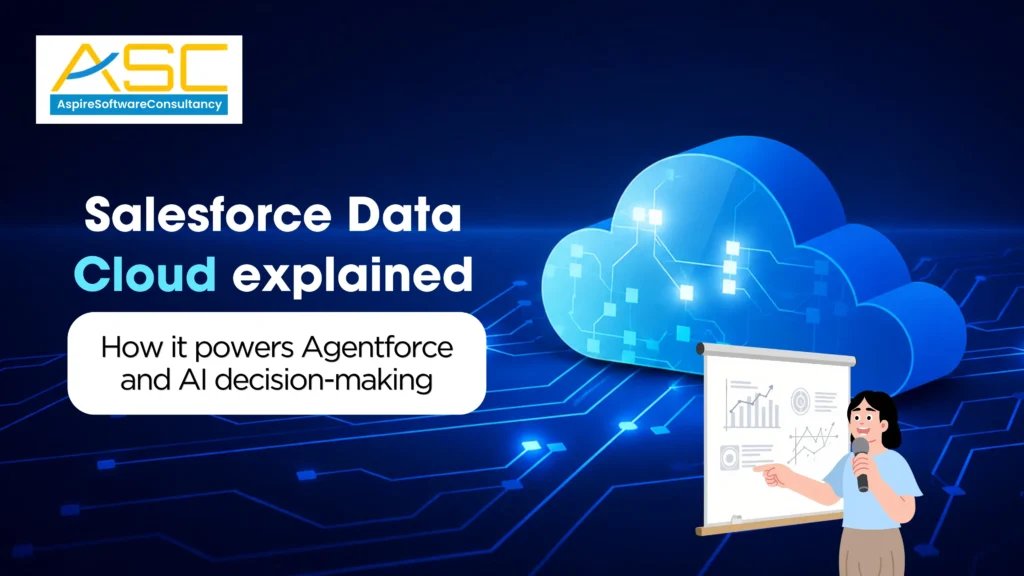
Illustration showing Salesforce Data Cloud connecting enterprise systems to power Agentforce AI and real-time customer decision-making.

Salesforce Data Cloud Explained: How It Powers Agentforce and AI Decision-Making

What Salesforce Data Cloud Is and Why It Matters Every enterprise AI deployment eventually hits the same wall: the AI gives inconsistent, generic, or wrong answers not because the model is bad, but because the data underneath it is fragmented. Salesforce Data Cloud is Salesforce’s answer to that problem. It is a real-time, hyperscale data platform that ingests customer information from every source your business runs CRM, ERP, website behaviour, mobile events, telephony, IoT, third-party providers and unifies it into a single, continuously updated customer profile. That unified profile is what Agentforce AI agents, Einstein analytics, Service Cloud, Sales Cloud, and Marketing Cloud all draw from simultaneously. Without it, every Salesforce cloud operates in its own silo, and every AI agent works with an incomplete picture of the customer. For enterprise teams evaluating Salesforce cloud integration services, Data Cloud is not an optional add-on, it is the foundational data layer that determines how intelligent and trustworthy your entire Salesforce AI investment will be. How Data Cloud Powers Agentforce Decision-Making Agentforce agents do not generate answers from generic training data they generate answers from your data. When a customer raises a support query, the Agentforce agent powered by Data Cloud does not search a static FAQ. It retrieves the customer’s real-time unified profile their open cases, purchase history, SLA entitlements, recent interactions using Retrieval Augmented Generation (RAG), a technique that grounds every AI response in live, verified enterprise data rather than a model’s best guess. Data Cloud also processes unstructured data emails, support ticket descriptions, PDF policy documents, call transcripts by converting them into searchable vector embeddings that Agentforce’s Atlas Reasoning Engine can query in milliseconds. The results are measurable: Reddit deployed Agentforce grounded in Data Cloud and deflected 46% of support cases without human intervention, cutting average response time from 8.9 minutes to 1.4 minutes. 1-800Accountant resolved 60% of incoming requests autonomously during peak tax season. Salesforce’s own Agentforce deployment resolved 84% of 380,000+ customer conversations without a human agent. The common factor in every high-performing deployment: a properly configured Data Cloud layer underneath. How Aspire Software Consultancy Connects Data Cloud to Your Enterprise The most common question ASC receives from enterprise teams is not whether Data Cloud is valuable it is how to connect it to the 5, 8, or 12 systems their customer data currently lives in. ASC’s Salesforce cloud integration services practice specialises in exactly this architecture challenge. Our certified integration team connects Data Cloud to SAP, Oracle NetSuite, Microsoft Dynamics 365, QuickBooks, Amazon Connect, Genesys, Twilio, Shopify, DocuSign, AWS, Snowflake, and custom-built platforms using MuleSoft Anypoint Platform for complex multi-system flows and REST/SOAP APIs for direct integrations. Every engagement begins with ASC’s Data Readiness Assessment — a structured audit covering data source inventory, quality scoring, duplicate resolution strategy, and API availability — completed before a single connector is configured. This diagnostic step is what prevents the mid-project surprises that cause most enterprise data integration projects to go over budget. With 18+ years of Salesforce delivery experience and 1,000+ CRM projects completed, Aspire Software Consultancy brings both the technical depth to unify your data architecture and the Agentforce expertise to deploy AI agents that actually perform at the resolution rates your business case requires. 93% of IT leaders plan to deploy autonomous AI agents within two years (Salesforce Connectivity Benchmark Report, 2025). The organisations that achieve the highest ROI are those that build their data foundation first. ASC helps you do both — in the right order. Ready to connect Salesforce Data Cloud to your AI strategy? Book a free Data Cloud Readiness Assessment with Aspire Software Consultancy certified Salesforce cloud integration services partner with 18+ years and 1,000+ projects delivered. Frequently Asked Questions What is Salesforce Data Cloud? Salesforce Data Cloud is a real-time customer data platform that unifies enterprise data from multiple systems into a single, continuously updated customer profile. It helps businesses improve AI decision-making, customer experiences, and cross-platform visibility. How does Salesforce Data Cloud support Agentforce? Agentforce uses Data Cloud to access live enterprise data such as customer interactions, purchase history, support cases, and SLA information. This enables AI agents to deliver more accurate, contextual, and personalized responses. What is Retrieval Augmented Generation (RAG) in Agentforce? Retrieval Augmented Generation (RAG) is an AI approach that retrieves verified enterprise data before generating a response. In Agentforce, RAG helps ground AI outputs in real-time business information instead of relying only on pre-trained model knowledge. Can Salesforce Data Cloud integrate with third-party platforms? Yes. Salesforce Data Cloud can integrate with ERP systems, ecommerce platforms, cloud services, telephony systems, and custom applications using APIs and integration platforms such as MuleSoft Anypoint Platform. Why are Salesforce cloud integration services important? Salesforce cloud integration services help enterprises connect disconnected systems, unify customer data, reduce operational silos, and enable scalable AI-driven automation across departments. Facebook Instagram Youtube Linkedin X-twitter

Salesforce Data Cloud Explained: How It Powers Agentforce and AI Decision-Making Read More »
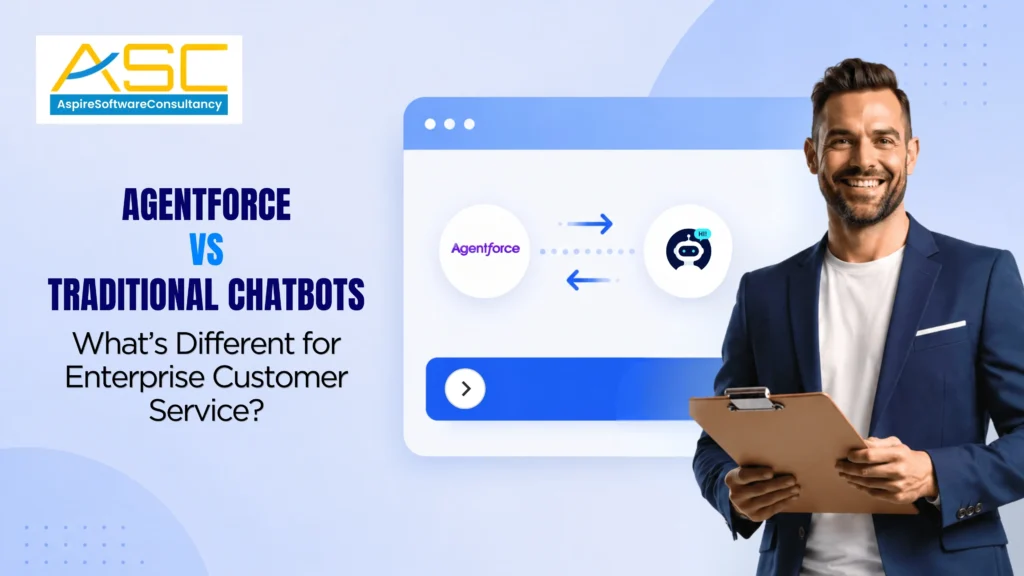
Comparison of Salesforce Agentforce and traditional chatbots highlighting AI customer service, Salesforce automation, and CRM customization features.

Agentforce vs Traditional Chatbots: What’s Different for Enterprise Customer Service?

The Hidden Problem with Traditional Chatbots Traditional chatbots were designed to simplify customer service, but most rely on rule-based scripts. They scan keywords and provide predefined responses, failing when queries fall outside programmed flows. This leads to high escalation rates and frustrated customers. For enterprises, this limitation highlights the need for Salesforce customization services that go beyond basic chatbot functionality and deliver intelligent, adaptable solutions. What Makes Salesforce Agentforce Different Salesforce Agentforce represents a shift from static responses to intelligent automation. Unlike traditional chatbots, it can: Understand customer intent using AI reasoning Access real-time data from Salesforce CRM and integrated systems Perform actions like case creation, refunds, and workflow execution With the help of Salesforce customization services, Agentforce can be tailored to align with your business processes, making customer interactions more efficient and accurate. The Role of Salesforce Customization Services Every business has unique workflows and customer journeys. Out-of-the-box solutions often fail to meet these needs. Salesforce customization services enable organizations to: Integrate multiple platforms using APIs and MuleSoft Customize workflows and automation rules Enhance data accuracy and real-time decision-making Reduce customer service costs through smarter automation A well-customized Salesforce environment ensures that AI tools like Agentforce deliver maximum value. Agentforce vs Traditional Chatbots: Key Differences Feature Traditional Chatbots Salesforce Agentforce Technology Rule-based scripts AI-driven reasoning Data Access Limited Real-time CRM & integrations Capability Respond only Respond + take action Escalation Rate High (40–60%) Low (as low as 2%) Customization Minimal Extensive with Salesforce customization services When to Use Agentforce vs Chatbots Use Traditional Chatbots for simple FAQs and repetitive queries Use Agentforce (Customized) for complex, multi-step service interactions Use Human Agents for sensitive or high-value conversations A hybrid model supported by Salesforce customization services helps businesses optimize performance and customer satisfaction. Conclusion The future of enterprise customer service lies in intelligent automation. While traditional chatbots have limitations, Agentforce—when powered by Salesforce customization services—delivers smarter, faster, and more personalized customer experiences. Organizations that invest in customization and data readiness will see higher automation rates, reduced costs, and improved customer loyalty. Frequently Asked Questions What is Salesforce Agentforce? Salesforce Agentforce is an AI-driven customer service solution that uses real-time CRM data, automation, and intelligent reasoning to handle customer interactions more effectively than traditional chatbots. How is Agentforce different from traditional chatbots? Traditional chatbots rely on predefined scripts and keyword-based responses, while Agentforce understands customer intent, accesses real-time Salesforce data, and performs actions like case creation, workflow automation, and record updates. Why are Salesforce customization services important for Agentforce? Salesforce customization services help businesses tailor workflows, integrations, automation rules, and customer journeys based on their unique operational requirements. This ensures Agentforce delivers faster, smarter, and more accurate customer support. Can Agentforce integrate with other business applications? Yes. With Salesforce customization services, Agentforce can integrate with ERP systems, payment gateways, helpdesk software, and third-party platforms using APIs and integration tools like MuleSoft. Does Agentforce reduce customer service escalation rates? Yes. Because Agentforce understands customer context and automates actions intelligently, businesses can significantly reduce customer service escalations compared to traditional chatbot solutions. Facebook Instagram Youtube Linkedin X-twitter

Agentforce vs Traditional Chatbots: What’s Different for Enterprise Customer Service? Read More »

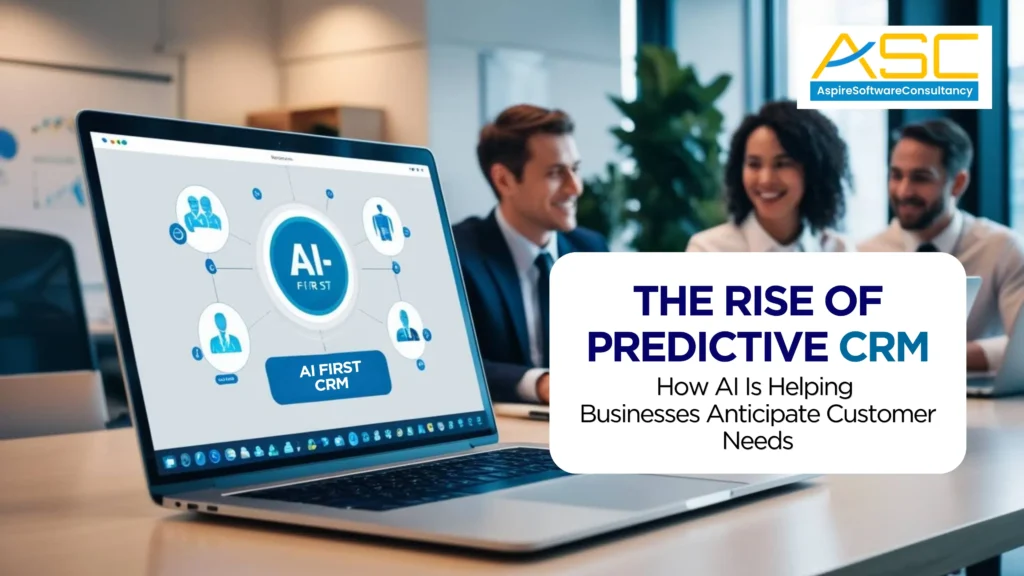
Predictive CRM dashboard with AI analytics helping businesses understand customer behavior and improve engagement

The Rise of Predictive CRM: How AI Is Helping Businesses Anticipate Customer Needs

In today’s fast moving digital economy, customer expectations are evolving faster than ever. Businesses are no longer competing only on product quality or pricing — they are competing on customer experience. Companies that can understand customer behavior, predict future needs, and deliver personalized interactions are gaining a significant competitive advantage. This is where predictive CRM powered by artificial intelligence is transforming modern business operations. Traditional CRM systems primarily focus on storing customer information and tracking interactions. However, modern businesses require more than just data storage. They need actionable insights that help sales, marketing, and customer support teams make smarter decisions in real time. With the rise of ai powered crm solutions, organizations can now forecast customer behavior, identify sales opportunities, reduce churn, and create highly personalized customer experiences. At Aspire Software Consultancy, we help businesses leverage advanced CRM technologies through expert salesforce consulting services, intelligent automation, and custom AI integrations that improve customer engagement and business performance. What Is Predictive CRM? Predictive CRM is an advanced approach to customer relationship management that uses artificial intelligence, machine learning, and analytics to predict customer actions and behaviors. Instead of simply reacting to customer activity, businesses can proactively anticipate what customers may need next. Predictive CRM systems analyze historical customer data, purchasing patterns, communication history, browsing activity, and engagement metrics to generate intelligent recommendations and forecasts. For example, predictive CRM can help businesses: Identify customers most likely to make a purchase Detect customers at risk of leaving Recommend personalized products or services Predict future sales trends Automate lead scoring and prioritization Improve customer retention strategies This intelligent use of data enables businesses to create more meaningful and personalized customer interactions. How AI Is Transforming CRM Systems Artificial intelligence is becoming a core component of modern CRM platforms. AI driven automation and analytics are helping organizations improve efficiency while delivering exceptional customer experiences. 1. Smarter Lead Scoring Sales teams often spend valuable time pursuing leads that may never convert. AI powered CRM systems automatically analyze customer behavior and assign lead scores based on conversion probability. This allows sales teams to focus on high value opportunities, improving productivity and revenue generation. A trusted salesforce crm development company can customize AI based lead scoring models according to business specific goals and customer data. 2. Personalized Customer Experiences Modern customers expect personalized interactions across every touchpoint. AI helps businesses understand customer preferences, interests, and buying behaviors to deliver targeted recommendations and communications. Using predictive analytics, businesses can send personalized product suggestions, customized offers, and timely follow ups that increase engagement and customer satisfaction. This is one of the biggest reasons companies are investing in customer intelligence platforms integrated with CRM systems. 3. Predicting Customer Churn Customer retention is often more cost effective than acquiring new customers. Predictive CRM tools can identify warning signs that indicate a customer may stop engaging with a business. AI algorithms analyze factors such as declining engagement, reduced purchases, support complaints, or inactivity to predict churn risks early. Businesses can then take proactive steps to improve customer relationships and prevent revenue loss. 4. Intelligent Sales Forecasting AI powered forecasting tools help organizations make data driven business decisions. By analyzing market trends, historical sales performance, and customer behavior, predictive CRM systems provide more accurate revenue predictions. This enables businesses to improve planning, resource allocation, and strategic decision making. Why Salesforce Is Leading the Predictive CRM Revolution Salesforce remains one of the most powerful CRM platforms for businesses seeking AI driven customer management solutions. With tools like Salesforce Einstein, businesses can integrate predictive analytics, automation, and AI powered insights directly into their workflows. As a professional salesforce development company, Aspire Software Consultancy helps businesses maximize the capabilities of Salesforce through tailored implementation and customization services. Our salesforce consulting services help organizations: Implement intelligent CRM workflows Build AI powered dashboards and reporting Automate customer engagement processes Improve sales and marketing alignment Integrate third party applications and data sources Develop scalable CRM ecosystems With the right CRM strategy, businesses can transform customer data into actionable intelligence that drives growth. The Importance of Salesforce Customization Every business has unique workflows, customer journeys, and operational requirements. A generic CRM setup often fails to meet industry specific needs. This is why salesforce customization services play a critical role in CRM success. Customized CRM solutions allow businesses to: Create tailored dashboards and reporting Automate repetitive business processes Improve team collaboration Enhance customer communication workflows Integrate AI models for predictive insights Build industry specific CRM modules A reliable salesforce crm development company can ensure that CRM platforms align perfectly with business goals while maintaining scalability and flexibility. Industries Benefiting from Predictive CRM Predictive CRM solutions are transforming industries across the globe. Businesses in multiple sectors are leveraging AI powered insights to improve customer relationships and operational efficiency. Retail and E commerce Retail businesses use predictive CRM to recommend products, personalize promotions, and forecast purchasing behavior. Healthcare Healthcare providers use predictive analytics to improve patient engagement, appointment scheduling, and communication workflows. Financial Services Banks and financial institutions use AI driven CRM systems to detect fraud risks, personalize financial products, and improve customer retention. Real Estate Real estate companies use predictive CRM to identify high potential leads and automate follow up communication. Travel and Hospitality Hospitality businesses use customer intelligence platforms to personalize guest experiences and improve loyalty programs. The Future of AI Powered CRM Solutions The future of CRM is becoming increasingly intelligent, automated, and customer centric. Businesses are moving toward systems that can predict customer needs before customers even express them. Emerging trends in predictive CRM include: Conversational AI and chatbots Real time customer sentiment analysis Hyper personalized marketing automation Voice enabled CRM interactions Predictive customer support AI driven workflow automation As AI technology continues to evolve, businesses that adopt predictive CRM early will gain a stronger competitive advantage in customer engagement and operational efficiency. Why Choose Aspire Software Consultancy At Aspire Software Consultancy, we specialize in delivering innovative CRM and AI solutions that help businesses improve customer experiences and drive

The Rise of Predictive CRM: How AI Is Helping Businesses Anticipate Customer Needs Read More »

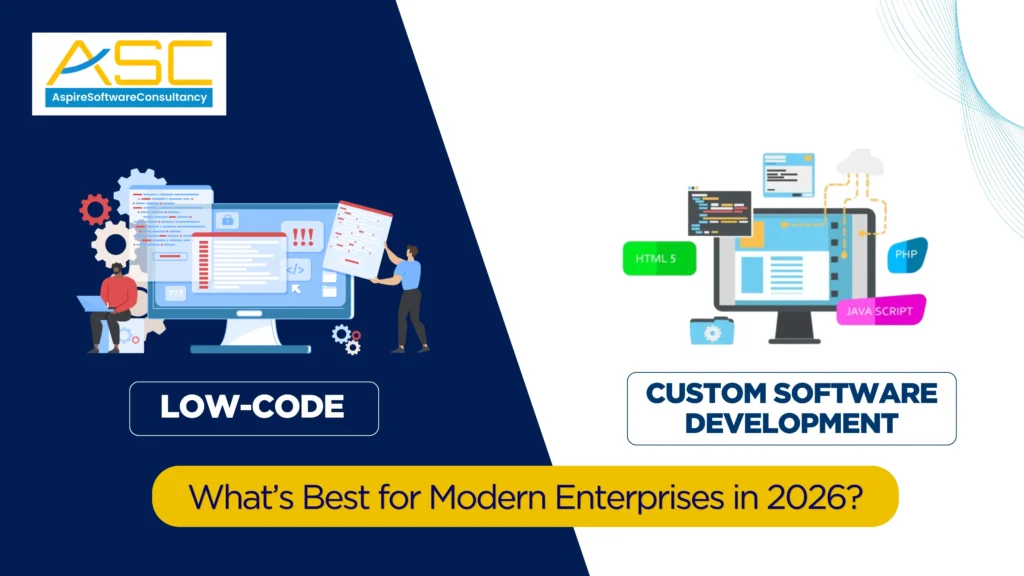
Comparison of low-code and custom software development solutions for modern enterprises in 2026

Low Code vs Custom Software Development: What’s Best for Modern Enterprises in 2026?

In 2026, businesses are under constant pressure to innovate faster, improve customer experiences, and streamline operations through technology. As organizations continue accelerating their digital transformation strategies, one important decision stands out: should they choose low code development platforms or invest in fully customized software solutions? Both approaches offer unique advantages, but selecting the right one depends on your business goals, scalability needs, budget, and long term vision. At Aspire Software Consultancy, we help enterprises evaluate the best technology approach through expert software consulting services and scalable development solutions. In this blog, we’ll explore the differences between low code and custom software development, their benefits, limitations, and which option is best suited for modern enterprises in 2026. What Is Low Code Development? Low code development is a software development approach that uses visual interfaces, drag and drop components, and pre built templates to create applications with minimal manual coding. Modern low code development platforms allow businesses to quickly build applications for workflow automation, CRM management, customer portals, reporting dashboards, and more. Popular low code platforms include: Microsoft Power Apps Salesforce Lightning Platform Mendix OutSystems Appian These platforms are gaining popularity because they significantly reduce development time and simplify deployment. What Is Custom Software Development? Custom software development involves designing and building applications specifically tailored to an organization’s business processes and goals. Unlike generic platforms, custom solutions are fully flexible and scalable. A professional custom software development company creates software that aligns with unique operational requirements, integrations, security standards, and future growth plans. Custom development is commonly used for: Enterprise ERP systems Healthcare platforms Banking and fintech applications E commerce platforms AI driven business systems Advanced CRM and ERP integrations At Aspire Software Consultancy, our team specializes in enterprise application development and scalable business software solutions designed for long term success. Key Differences Between Low Code and Custom Development Feature Low Code Development Custom Software Development Development Speed Faster Longer development cycle Flexibility Limited customization Fully customizable Scalability Moderate High scalability Cost Lower initial cost Higher upfront investment Maintenance Platform managed Fully controlled by business Integration Platform dependent Unlimited integration capabilities Security Standardized security Advanced custom security Ownership Vendor/platform controlled Full ownership Benefits of Low Code Development Platforms 1. Faster Development and Deployment One of the biggest advantages of low code solutions is speed. Businesses can launch applications within weeks instead of months. This is ideal for: MVP development Internal business tools Workflow automation Temporary business solutions For enterprises looking to quickly adapt to changing market demands, low code can be highly effective. 2. Reduced Development Costs Low code platforms reduce coding effort, which lowers initial development costs. Organizations with limited budgets can still modernize operations without hiring large engineering teams. This makes low code attractive for startups and mid sized businesses. 3. Easier Business User Participation Many low code platforms allow non technical users to contribute to application development. Business teams can: Create workflows Modify forms Automate processes Build dashboards This improves collaboration between technical and non technical departments. Limitations of Low Code Development While low code platforms offer convenience, they also come with important limitations. Limited Customization Complex business requirements may exceed platform capabilities. Enterprises often face restrictions when trying to implement advanced features. Vendor Dependency Businesses depend heavily on the platform provider for pricing, updates, and support. Scalability Challenges As business operations grow, low code applications may struggle with performance, architecture flexibility, and large scale integrations. Security and Compliance Concerns Industries like healthcare, banking, and insurance often require advanced compliance frameworks that low code platforms may not fully support. Benefits of Custom Software Development 1. Complete Flexibility Custom software is built specifically for your business requirements. A trusted software development consultancy ensures that every feature, workflow, and integration aligns with your operational goals. This flexibility becomes critical for enterprises with complex business processes. 2. Better Scalability for Enterprise Growth Custom applications can scale alongside business growth. Whether you are adding new users, expanding services, or integrating AI capabilities, custom architecture supports long term scalability. This is especially important for large enterprises investing in future ready systems. 3. Advanced Security and Compliance Security remains a top priority in 2026. Custom built solutions provide: Role based access control Advanced encryption Custom compliance frameworks Enterprise grade authentication Secure API integrations A professional custom .NET development company can build secure enterprise solutions using modern Microsoft technologies and cloud infrastructure. 4. Seamless Integration Capabilities Modern enterprises rely on multiple platforms such as Salesforce, ERP systems, HR software, payment gateways, and analytics tools. Custom development enables seamless integrations across all business systems without platform limitations. When Should Businesses Choose Low Code? Low code development works best when: Speed is the top priority Budget is limited The application is relatively simple Internal workflow automation is needed Minimal customization is required Rapid prototyping is important Examples include: Employee management tools Approval workflows Reporting dashboards Customer support portals When Should Businesses Choose Custom Software Development? Custom development is the better option when: Business processes are highly complex Scalability is essential Security and compliance are critical Long term ROI matters Advanced integrations are required Competitive differentiation is important Industries such as finance, healthcare, logistics, manufacturing, and enterprise SaaS often benefit more from custom solutions. The Hybrid Approach: The Future of Enterprise Development In 2026, many enterprises are adopting a hybrid approach that combines low code platforms with custom software development. For example: Low code for internal workflows Custom APIs for advanced integrations Custom AI modules connected to low code systems Enterprise grade backend with low code front end tools This balanced strategy allows businesses to improve speed while maintaining scalability and flexibility. At Aspire Software Consultancy, we help organizations identify the right mix of technologies based on their business objectives. How Aspire Software Consultancy Helps Enterprises As a trusted provider of software consulting services, Aspire Software Consultancy delivers tailored development strategies for modern businesses. Our expertise includes: Enterprise software architecture Salesforce development and integration Custom .NET application development Cloud based enterprise solutions CRM and ERP integrations AI powered

Low Code vs Custom Software Development: What’s Best for Modern Enterprises in 2026? Read More »

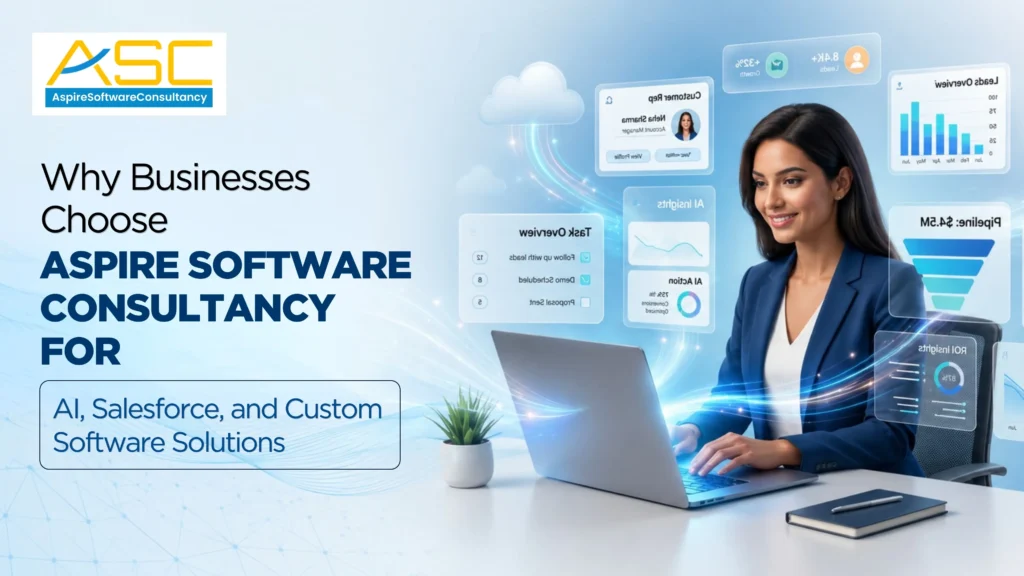
Aspire Software Consultancy AI Salesforce and custom software solutions

Why Businesses Choose Aspire Software Consultancy for AI, Salesforce, and Custom Software Solutions

In today’s fast-paced digital landscape, businesses must adopt innovative technologies to stay competitive. From AI-driven automation to seamless CRM systems and scalable applications, organizations are constantly seeking reliable partners who can turn their vision into reality. This is where Aspire Software Consultancy stands out as a trusted software development consultancy helping businesses accelerate growth through intelligent solutions. Understanding the Modern Business Needs Modern enterprises require more than just basic IT support. They need strategic guidance, scalable systems, and integrated platforms that align with their business goals. Whether it’s implementing AI solutions, optimizing CRM processes, or building custom applications, choosing the right IT consulting company plays a crucial role. Aspire Software Consultancy bridges this gap by offering end-to-end software consulting services that combine technical expertise with industry insights. Expertise in AI-Driven Solutions Artificial Intelligence is no longer optional—it’s a necessity for businesses aiming to improve efficiency and decision-making. Aspire Software Consultancy helps organizations leverage AI for: Process automation Predictive analytics Customer behavior insights Intelligent workflows Unlike generic providers, Aspire focuses on tailored AI strategies that align with business objectives. Their approach ensures companies gain measurable ROI rather than just adopting technology for the sake of it. Strong Capabilities in Salesforce Solutions Salesforce remains one of the most powerful CRM platforms, but its true potential can only be unlocked with expert implementation. As a reliable provider of Salesforce consulting services, Aspire Software Consultancy helps businesses: Customize Salesforce based on their workflow Integrate Salesforce with other enterprise systems Automate sales, marketing, and customer support processes Improve customer engagement and retention Being a trusted Salesforce development company, Aspire ensures seamless CRM implementation that enhances productivity and drives business growth. Custom Software Development for Unique Business Needs Every business has unique challenges that off-the-shelf solutions cannot fully address. This is where Aspire excels as a custom software development company. Their team builds scalable, secure, and high-performance applications tailored to specific requirements. Whether it’s a startup looking for an MVP or an enterprise needing complex platforms, Aspire delivers solutions that grow with your business. Key benefits of their custom development approach include: Personalized functionality Improved operational efficiency Better data management Enhanced user experience End-to-End Enterprise Application Development Digital transformation often requires robust systems that integrate various business functions. Aspire specializes in enterprise application development, enabling organizations to streamline operations and improve collaboration across departments. From ERP systems to cloud-based platforms, Aspire ensures: Seamless integration between applications Scalable architecture for future growth High-level data security Real-time insights for better decision-making Their expertise allows businesses to eliminate silos and achieve operational excellence. A Strategic Approach to IT Consulting What sets Aspire apart from other service providers is its strategic approach. As a forward-thinking IT consulting company, they don’t just deliver solutions—they align technology with business goals. Their consulting process includes: Understanding business challenges Identifying the right technology stack Designing scalable solutions Ensuring smooth implementation Providing continuous support and optimization This holistic approach ensures long-term success rather than short-term fixes. Focus on Quality, Innovation, and Scalability Businesses choose Aspire Software Consultancy because of its commitment to: Quality: Delivering reliable and high-performing solutions Innovation: Leveraging the latest technologies like AI and automation Scalability: Building systems that grow with business needs Their agile development methodology ensures faster delivery without compromising quality, making them a preferred software consulting services provider. Client-Centric Approach Aspire believes in building long-term partnerships rather than one-time transactions. Their client-first approach includes: Transparent communication Regular project updates Customized solutions Dedicated support teams This level of commitment helps businesses feel confident in their technology investments. Proven Track Record Across Industries Aspire Software Consultancy has successfully delivered solutions across multiple industries, including: Healthcare Finance Retail Manufacturing Technology Their cross-industry experience allows them to understand unique challenges and provide solutions that deliver real business value. Why Aspire Software Consultancy is the Right Choice To summarize, businesses choose Aspire because they offer: Comprehensive software development consultancy services Expertise in AI and automation Reliable Salesforce consulting services and development Tailored solutions as a custom software development company Advanced enterprise application development capabilities Strategic guidance from an experienced IT consulting company With a strong focus on innovation, scalability, and client success, Aspire Software Consultancy empowers businesses to achieve digital transformation effectively. Frequently Asked Questions What does a software development consultancy do? A software development consultancy helps businesses design, develop, and implement technology solutions tailored to their specific needs, ensuring scalability and efficiency. Why should businesses invest in Salesforce consulting services? Salesforce consulting services help organizations customize and optimize their CRM, improving customer relationships, sales processes, and overall productivity. How does custom software development benefit businesses? Custom software provides tailored solutions, improves operational efficiency, and offers better scalability compared to off-the-shelf applications. What industries benefit from enterprise application development? Industries like healthcare, finance, retail, and manufacturing benefit from enterprise applications by improving workflows, data management, and decision-making. How can AI solutions improve business operations? AI helps automate repetitive tasks, provides predictive insights, enhances customer experience, and enables smarter decision-making. Facebook Instagram Youtube Linkedin X-twitter

Why Businesses Choose Aspire Software Consultancy for AI, Salesforce, and Custom Software Solutions Read More »

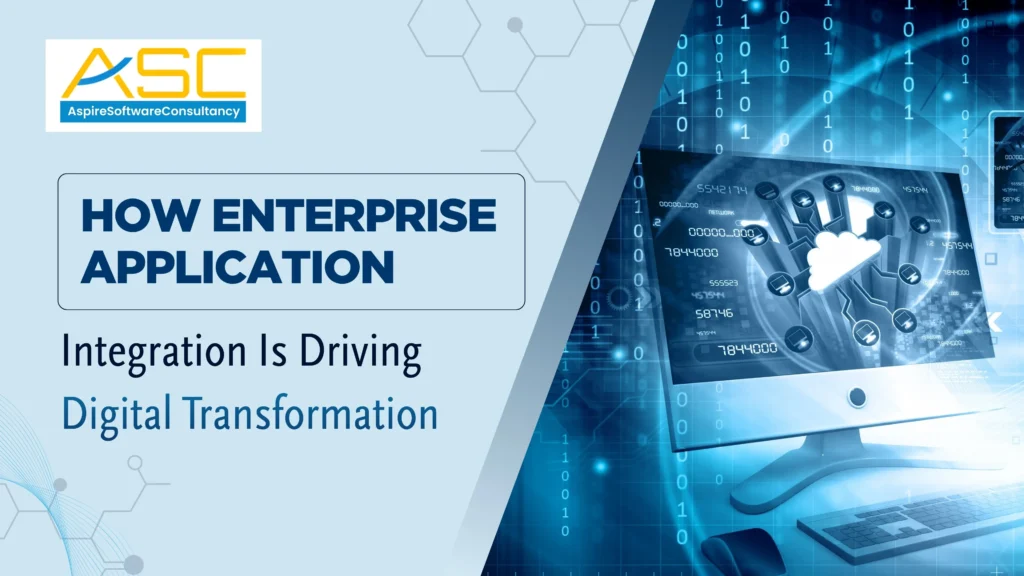
Illustration of enterprise application integration connecting multiple business systems to drive digital transformation and improve efficiency

How Enterprise Application Integration Is Driving Digital Transformation

In today’s fast-paced digital landscape, businesses rely on multiple software systems to manage operations, customer relationships, data analytics, and more. However, when these systems operate in silos, they create inefficiencies, data inconsistencies, and missed opportunities. This is where enterprise application integration plays a critical role in enabling true digital transformation. At Aspire Software Consultancy, we help businesses connect their systems seamlessly to unlock efficiency, agility, and innovation through smart integration strategies. What is Enterprise Application Integration? Enterprise application integration (EAI) is the process of connecting different software applications, systems, and databases within an organization to work as a unified ecosystem. Instead of functioning independently, integrated systems share data and processes in real time. This approach ensures that information flows smoothly across departments—whether it’s sales, marketing, finance, or operations—creating a more efficient and responsive business environment. Why Integration is the Backbone of Digital Transformation Digital transformation is not just about adopting new technologies; it’s about redefining how businesses operate and deliver value. Without integration, digital initiatives often fail to deliver expected results. Here’s how system integration services drive transformation: 1. Eliminating Data Silos Disconnected systems lead to fragmented data. Integration ensures a single source of truth, improving decision-making and reducing errors. 2. Enhancing Operational Efficiency Automating workflows across systems reduces manual work, speeds up processes, and minimizes human errors. 3. Improving Customer Experience With integrated systems like CRM, businesses gain a 360-degree view of customers, enabling personalized interactions and faster service. 4. Enabling Real-Time Insights Integrated systems provide real-time data access, allowing businesses to respond quickly to market changes and customer needs. The Role of Salesforce Integration in Modern Businesses One of the most powerful ways to achieve seamless connectivity is through Salesforce integration services. Salesforce is widely used as a CRM platform, but its true potential is unlocked when integrated with other business systems. Key Benefits of Salesforce CRM Integration Services: Centralized Customer Data Sync data from multiple platforms into one unified CRM system. Automated Sales & Marketing Workflows Reduce manual tasks and improve productivity. Better Forecasting & Analytics Use integrated data for accurate predictions and insights. Improved Collaboration Teams across departments can access the same real-time data. At Aspire Software Consultancy, we specialize in Salesforce CRM integration services that connect your CRM with ERP systems, marketing tools, and third-party applications. Enterprise Application Development + Integration = Scalable Growth Integration works best when combined with strong enterprise application development. Custom-built applications designed with integration in mind ensure scalability and flexibility. Why Businesses Choose Custom Development: Tailored solutions aligned with business goals Easy integration with existing systems Better security and performance Future-ready architecture for scaling operations Our software consulting services focus on designing applications that not only meet current needs but also adapt to future technological advancements. Key Integration Approaches Businesses Use Today To successfully implement digital transformation solutions, businesses use different integration methods: 1. API-Based Integration APIs allow systems to communicate in real time, making them the most popular integration method. 2. Middleware Integration Middleware acts as a bridge between different applications, simplifying complex integrations. 3. Cloud-Based Integration Cloud platforms enable scalable and flexible integration across distributed systems. 4. Data Integration Combines data from multiple sources into a unified view for analytics and reporting. Choosing the right approach depends on your business requirements, existing infrastructure, and long-term goals. Challenges in Enterprise Integration (and How to Overcome Them) While integration offers immense benefits, it comes with challenges: Legacy Systems: Older systems may not support modern integration methods Data Security Risks: Sensitive data needs secure handling Complex Architecture: Multiple systems increase complexity High Initial Investment: Integration requires strategic planning With the right software consulting services, these challenges can be addressed effectively. At Aspire Software Consultancy, we provide end-to-end guidance—from strategy to implementation and ongoing support. How Aspire Software Consultancy Helps You Succeed We provide comprehensive digital transformation solutions powered by robust integration strategies: End-to-end enterprise application integration Custom enterprise application development Expert Salesforce integration services Scalable and secure system integration services Strategic software consulting services Our goal is to help businesses become more agile, data-driven, and customer-centric. Future of Enterprise Integration As technologies like AI, IoT, and cloud computing evolve, integration will become even more critical. Businesses that invest in strong integration frameworks today will be better positioned to innovate and compete in the future. The shift toward hyperautomation and intelligent workflows will further emphasize the need for seamless system connectivity. Frequently Asked Questions What is enterprise application integration? Enterprise application integration is the process of connecting different business systems to enable seamless data flow and improve efficiency. Why is integration important for digital transformation? Integration eliminates data silos, improves workflows, and enables real-time insights, making digital transformation more effective. What are Salesforce integration services? Salesforce integration services connect Salesforce CRM with other business applications to streamline operations and improve customer management. How do system integration services benefit businesses? They improve efficiency, reduce manual work, enhance data accuracy, and enable better decision-making. What is the difference between integration and development? Integration connects existing systems, while development focuses on building new applications. Both work together for scalable solutions. Facebook Instagram Youtube Linkedin X-twitter

How Enterprise Application Integration Is Driving Digital Transformation Read More »

AI agents use cases in Salesforce across industries including sales automation, customer support, marketing, and CRM integration

Top Use Cases of AI Agents in Salesforce: Real-World Applications Across Industries

In today’s fast-moving digital landscape, businesses are under constant pressure to deliver faster, smarter, and more personalized experiences. This is where AI agents in Salesforce are transforming how organizations operate. By combining automation, intelligence, and real-time data insights, AI agents are enabling businesses to move beyond traditional CRM usage and unlock true operational efficiency. At Aspire Software Consultancy, we help organizations implement advanced salesforce consulting services that leverage AI-driven workflows to streamline processes, improve decision-making, and enhance customer engagement. Let’s explore the top AI agents use cases in Salesforce and how they are driving real-world impact across industries. What Are AI Agents in Salesforce? AI agents in Salesforce are intelligent systems that can autonomously perform tasks, analyze data, and make decisions with minimal human intervention. Powered by technologies like machine learning and predictive analytics, these agents enhance salesforce automation use cases by making processes smarter and more adaptive. From handling customer queries to predicting sales opportunities, AI agents are reshaping how businesses use CRM platforms. 1. Intelligent Sales Automation One of the most impactful salesforce automation use cases is in sales processes. AI agents help sales teams: Automatically prioritize leads based on conversion probability Predict customer buying behavior Recommend next best actions for sales reps This reduces manual effort and allows teams to focus on high-value opportunities. A reliable salesforce development company can customize these AI capabilities to align with your sales workflows. 2. AI-Powered Customer Support Customer expectations are higher than ever, and AI agents play a key role in meeting them. In customer service, AI agents can: Provide instant responses via chatbots Automatically categorize and route support tickets Suggest solutions based on historical cases With the help of salesforce customization services, businesses can build intelligent support systems that deliver faster resolution times and improved customer satisfaction. 3. Smart Marketing Automation AI agents are revolutionizing marketing by enabling hyper-personalization. Businesses can: Segment audiences dynamically Predict campaign performance Automate email journeys based on user behavior When integrated with salesforce crm integration services, marketing teams gain a unified view of customer data, ensuring more targeted and effective campaigns. 4. Predictive Analytics for Better Decision-Making AI agents analyze vast amounts of CRM data to provide actionable insights. This helps businesses: Forecast sales trends Identify potential risks Optimize resource allocation Using advanced salesforce integration services, companies can connect multiple data sources, allowing AI agents to deliver more accurate predictions. 5. Automated Workflow Management Manual workflows often slow down operations and increase errors. AI agents streamline workflows by: Automating approvals and task assignments Triggering actions based on predefined conditions Reducing dependency on manual intervention This is one of the most practical ai agents use cases in salesforce, especially for organizations looking to scale operations efficiently. 6. Personalized Customer Experience AI agents enhance customer experience by delivering personalization at scale. They can: Recommend products or services based on user behavior Customize communication across channels Provide real-time engagement insights With the right salesforce consulting services, businesses can implement AI-driven personalization strategies that build stronger customer relationships. 7. Seamless System Integration Many organizations use multiple tools across departments, leading to data silos. AI agents, combined with salesforce integration services, help: Synchronize data across platforms Eliminate inconsistencies Improve cross-team collaboration This ensures that every department works with accurate and up-to-date information. Industry-Wise Applications of AI Agents in Salesforce Healthcare AI agents help manage patient data, automate appointment scheduling, and improve patient engagement through personalized communication. Retail & E-commerce Businesses use AI agents to recommend products, optimize inventory, and enhance customer journeys. Financial Services AI-driven systems detect fraud, assess risk, and provide personalized financial recommendations. Manufacturing AI agents streamline supply chain operations, predict maintenance needs, and optimize production processes. IT & SaaS Organizations leverage AI agents to automate customer onboarding, support, and subscription management. Why Businesses Are Adopting AI Agents in Salesforce The growing adoption of AI in CRM systems is driven by: Increased efficiency through automation Improved accuracy in decision-making Enhanced customer experience Scalable business operations Partnering with an experienced salesforce development company ensures that AI implementations are aligned with your business goals. How Aspire Software Consultancy Can Help At Aspire Software Consultancy, we specialize in delivering end-to-end Salesforce solutions, including: salesforce consulting services tailored to your business needs Advanced salesforce customization services for AI-driven workflows Seamless salesforce crm integration services Scalable salesforce integration services across platforms Our goal is to help businesses unlock the full potential of AI-powered Salesforce solutions. Frequently Asked Questions What are AI agents in Salesforce? AI agents in Salesforce are intelligent tools that automate tasks, analyze data, and improve decision-making within CRM systems. How do AI agents improve Salesforce automation? They enhance automation by making workflows smarter, predictive, and more efficient, reducing manual effort. What industries benefit from AI agents in Salesforce? Industries like healthcare, retail, finance, manufacturing, and IT benefit significantly from AI-driven Salesforce solutions. Are AI agents customizable in Salesforce? Yes, with salesforce customization services, AI agents can be tailored to meet specific business requirements. Why should businesses invest in Salesforce AI solutions? AI solutions improve productivity, enhance customer experience, and enable data-driven decision-making. Facebook Instagram Youtube Linkedin X-twitter

Top Use Cases of AI Agents in Salesforce: Real-World Applications Across Industries Read More »

AI agents in Salesforce automating CRM workflows and improving business operations efficiency

AI Agents in Salesforce: How Autonomous Workflows Are Transforming Business Operations

In today’s fast-paced digital landscape, businesses are constantly looking for smarter ways to improve efficiency, reduce manual effort, and deliver better customer experiences. This is where AI agents in Salesforce are making a powerful impact. By enabling autonomous workflows in CRM, organizations can automate decision-making, streamline processes, and unlock new levels of productivity. At Aspire Software Consultancy, we help businesses leverage cutting-edge innovations like salesforce agentforce implementation to stay ahead in a competitive market. What Are AI Agents in Salesforce? AI agents in Salesforce are intelligent systems designed to perform tasks, make decisions, and interact with data with minimal human intervention. These agents use machine learning, automation, and predictive analytics to execute workflows across various business functions such as sales, customer service, and marketing. Unlike traditional automation, AI agents don’t just follow predefined rules—they learn from data, adapt to changing scenarios, and continuously optimize processes. Understanding Autonomous Workflows in CRM Autonomous workflows in CRM go beyond simple automation. They enable systems to: Analyze real-time data Make intelligent decisions Trigger actions automatically Improve outcomes through continuous learning For example, an AI-powered Salesforce system can automatically assign leads to the most suitable sales representative, predict customer needs, or resolve support queries without human involvement. Key Benefits of AI Agents in Salesforce 1. Enhanced Operational Efficiency AI agents eliminate repetitive manual tasks, allowing teams to focus on strategic activities. Businesses can achieve faster turnaround times and improved productivity. 2. Smarter Decision-Making With real-time insights and predictive analytics, AI agents empower organizations to make data-driven decisions. 3. Improved Customer Experience AI-driven workflows ensure quicker responses, personalized interactions, and consistent service quality. 4. Scalability As your business grows, AI agents can handle increased workloads without additional resource investment. 5. Reduced Errors Automation minimizes human errors, ensuring accuracy in processes such as data entry, reporting, and customer interactions. Real-World Use Cases Sales Automation AI agents can analyze customer behavior, prioritize leads, and recommend the next best action. With proper salesforce customization services, businesses can tailor these capabilities to their specific needs. Customer Support AI-powered chatbots and service agents can resolve common queries, escalate complex issues, and provide 24/7 support. Marketing Automation AI agents can segment audiences, personalize campaigns, and optimize engagement strategies in real time. Workflow Optimization Through salesforce integration services, AI agents can connect with other business systems, ensuring seamless data flow and process automation across departments. Role of Salesforce Agentforce Implementation Implementing AI agents effectively requires expertise and a strategic approach. Salesforce agentforce implementation focuses on integrating AI capabilities within your CRM ecosystem to enable autonomous workflows. At Aspire Software Consultancy, our approach includes: Understanding your business processes Identifying automation opportunities Customizing AI workflows Integrating with existing systems Continuous optimization and support Why Businesses Need Salesforce Consulting Services Adopting AI-driven CRM solutions is not just about technology—it’s about transformation. Professional salesforce consulting services help businesses: Align AI capabilities with business goals Ensure seamless implementation Maximize ROI from Salesforce investments Maintain compliance and data security Working with an experienced salesforce development company ensures that your AI initiatives are scalable, secure, and future-ready. Best Practices for Implementing AI Agents To get the most out of AI agents in Salesforce, businesses should follow these best practices: Define Clear Objectives Identify the specific problems you want to solve with AI-powered automation. Start Small and Scale Begin with a pilot project and gradually expand AI capabilities across departments. Focus on Data Quality AI agents rely on accurate and clean data to deliver meaningful results. Invest in Customization Leverage salesforce customization services to tailor AI workflows to your business needs. Ensure Seamless Integration Use salesforce integration services to connect AI agents with other enterprise systems. Future of AI in Salesforce The future of Salesforce is deeply connected with AI innovation. As technologies evolve, AI agents will become more advanced, capable of handling complex decision-making processes and delivering hyper-personalized customer experiences. Businesses that adopt AI-driven CRM solutions today will gain a significant competitive advantage by improving efficiency, reducing costs, and enhancing customer satisfaction. Why Choose Aspire Software Consultancy? At Aspire Software Consultancy, we specialize in delivering end-to-end Salesforce solutions, including: Salesforce consulting services Salesforce agentforce implementation Salesforce integration services Salesforce customization services Our team ensures that your CRM system evolves into an intelligent, autonomous platform that drives real business growth. Frequently Asked Questions What are AI agents in Salesforce? AI agents are intelligent systems within Salesforce that automate tasks, analyze data, and make decisions to improve business processes. How do autonomous workflows in CRM benefit businesses? They reduce manual effort, improve efficiency, enhance customer experience, and enable data-driven decision-making. What is Salesforce agentforce implementation? It is the process of integrating AI-powered agents into Salesforce to enable autonomous workflows and intelligent automation. Do I need Salesforce consulting services for AI implementation? Yes, professional consulting ensures proper strategy, implementation, and optimization of AI capabilities. Can AI agents be customized for specific business needs? Absolutely. With salesforce customization services, AI workflows can be tailored to match unique business requirements. Facebook Instagram Youtube Linkedin X-twitter

AI Agents in Salesforce: How Autonomous Workflows Are Transforming Business Operations Read More »

API integration services connecting business systems for improved efficiency, automation, and seamless data flow

API Integration Services: How to Connect Your Business Systems for Better Efficiency

In today’s fast-paced digital landscape, businesses rely on multiple software tools to manage operations—CRM systems, accounting platforms, marketing tools, and more. While each system serves a purpose, disconnected applications often lead to inefficiencies, data silos, and missed opportunities. This is where API integration services play a critical role. At Aspire Software Consultancy, we help businesses seamlessly connect their systems to improve efficiency, automate workflows, and unlock real-time insights. What Are API Integration Services? API (Application Programming Interface) integration allows different software systems to communicate and share data with each other in real time. Instead of manually transferring data between platforms, APIs automate the process, ensuring accuracy and speed. For example, integrating your CRM with your marketing platform ensures that customer data flows seamlessly, helping your team make better decisions faster. Businesses today increasingly rely on software consulting services to design and implement robust API integrations tailored to their unique needs. Why API Integration Matters for Businesses Disconnected systems create operational bottlenecks. Employees waste time switching between platforms, duplicating data, and correcting errors. With the right API integration strategy, businesses can: Eliminate manual data entry Improve data accuracy Enhance team productivity Enable real-time reporting Deliver better customer experiences Modern organizations investing in IT consultancy services are prioritizing integration as a key step toward digital transformation. Key Benefits of API Integration 1. Improved Operational Efficiency API integration automates repetitive tasks, reducing manual effort and saving time. This allows teams to focus on strategic activities rather than administrative work. 2. Real-Time Data Synchronization Integrated systems ensure that data is updated across all platforms instantly. This is especially valuable for sales, marketing, and customer support teams. 3. Better Decision-Making With accurate and centralized data, businesses can generate meaningful insights and make informed decisions quickly. 4. Scalability for Growth As your business grows, integrated systems can easily adapt to new tools and technologies. This flexibility is crucial in modern enterprise application development. 5. Enhanced Customer Experience API integrations enable personalized customer interactions by providing a unified view of customer data across platforms. Salesforce Integration: A Powerful Use Case One of the most common and impactful integrations involves CRM systems like Salesforce. Businesses leveraging salesforce integration services can connect their CRM with marketing automation tools, ERP systems, customer support platforms, and more. Why Salesforce Integration? Centralizes customer data Automates lead management Improves sales pipeline visibility Enhances customer engagement With salesforce crm integration services, businesses can ensure seamless communication between sales, marketing, and service teams. Additionally, salesforce cloud integration services allow organizations to connect cloud-based applications, making operations more agile and scalable. Common API Integration Scenarios Here are some practical examples of how businesses use API integration: CRM + Email Marketing Tools ERP + Inventory Management Systems Payment Gateways + E-commerce Platforms HR Systems + Payroll Software Customer Support Tools + CRM These integrations eliminate redundancies and create a unified workflow across departments. Challenges in API Integration While API integration offers numerous benefits, it also comes with challenges: Compatibility issues between systems Data security concerns Complex implementation processes Maintenance and updates This is why working with an experienced software development consultancy is essential. Experts ensure that integrations are secure, scalable, and aligned with business goals. How Aspire Software Consultancy Can Help At Aspire Software Consultancy, we specialize in delivering tailored API integration solutions that align with your business objectives. Our approach includes: 1. Requirement Analysis We understand your existing systems, workflows, and business goals. 2. Custom Integration Strategy We design a solution that ensures seamless communication between your applications. 3. Secure Implementation Our team ensures that all integrations follow best practices for data security and compliance. 4. Testing & Optimization We rigorously test integrations to ensure performance and reliability. 5. Ongoing Support We provide continuous support to keep your systems running smoothly. With expertise in software consulting services and enterprise application development, we help businesses build connected ecosystems that drive efficiency and growth. Best Practices for Successful API Integration To get the most out of API integration, businesses should follow these best practices: Choose scalable and flexible APIs Prioritize data security and compliance Use standardized data formats Monitor performance regularly Work with experienced integration partners Investing in professional IT consultancy services ensures that your integration strategy is future-ready. The Future of API Integration As businesses continue to adopt cloud technologies and digital platforms, API integration will become even more critical. Emerging trends include: AI-powered integrations Low-code and no-code integration platforms Increased focus on real-time data processing Expansion of cloud-based integrations Organizations that embrace these trends will gain a competitive edge in efficiency and innovation. Conclusion API integration is no longer a luxury—it’s a necessity for businesses looking to scale and stay competitive. By connecting your systems, you can streamline operations, improve data accuracy, and deliver better customer experiences. At Aspire Software Consultancy, we provide expert-driven API integration solutions that empower your business to operate smarter and grow faster. Frequently Asked Questions What is API integration in simple terms? API integration connects different software systems so they can share data automatically, reducing manual work and improving efficiency. Why is API integration important for businesses? It improves productivity, ensures real-time data flow, reduces errors, and enhances decision-making. What are Salesforce integration services? These services connect Salesforce with other business applications to streamline operations and improve customer relationship management. How long does API integration take? The timeline depends on the complexity of systems involved, but it can range from a few days to several weeks. Is API integration secure? Yes, when implemented correctly with proper authentication, encryption, and monitoring, API integration is highly secure. Facebook Instagram Youtube Linkedin X-twitter

API Integration Services: How to Connect Your Business Systems for Better Efficiency Read More »

Illustration showing how custom software development helps businesses scale faster through automation, integration, and enterprise application development

How Custom Software Development Helps Businesses Scale Faster

In today’s competitive digital landscape, businesses are under constant pressure to grow faster, operate smarter, and deliver better customer experiences. While off-the-shelf tools may offer quick solutions, they often fall short when it comes to scalability and flexibility. This is where a custom software development company plays a critical role. At Aspire Software Consultancy, we help businesses build scalable, future-ready solutions tailored to their unique needs. Let’s explore how custom software development empowers businesses to scale faster and more efficiently. 1. Tailored Solutions for Business Growth Every business operates differently, with its own workflows, goals, and challenges. Off-the-shelf software often forces companies to adapt to rigid systems, limiting growth potential. Custom solutions, on the other hand, are designed specifically for your business. A reliable software development consultancy ensures that every feature aligns with your operational needs, enabling smoother workflows and improved productivity. This level of customization eliminates unnecessary features and focuses on what truly matters—growth. 2. Scalability Without Limitations One of the biggest advantages of custom software is scalability. As your business grows, your software should evolve with it. With enterprise application development, you can: Add new features as needed Handle increased user traffic Integrate with new technologies Unlike generic tools, custom-built systems are designed with scalability in mind from the start. This means you won’t outgrow your software as your business expands. 3. Seamless Integration with Existing Systems Businesses often rely on multiple tools—CRM, ERP, marketing platforms, and more. Managing disconnected systems can slow down operations and create inefficiencies. Custom software enables seamless integration between different systems, ensuring smooth data flow and better decision-making. With professional software consulting services, businesses can unify their technology stack and eliminate data silos. This integration improves operational efficiency and supports faster scaling. 4. Enhanced Performance and Efficiency Off-the-shelf solutions often come with unnecessary features that can slow down performance. Custom software is built with only the required functionalities, ensuring optimal speed and efficiency. For example, businesses leveraging .net application development services benefit from: High performance Robust architecture Secure and scalable frameworks A trusted custom .net development company can build applications that handle complex operations without compromising performance. 5. Better Security and Data Protection As businesses grow, they handle more sensitive data—customer information, financial records, and operational data. Security becomes a top priority. Custom software offers enhanced security features tailored to your business needs. Unlike widely used off-the-shelf tools, custom solutions are less vulnerable to common cyber threats. With expert software consultancy services, businesses can implement: Advanced encryption Role-based access control Regular security updates This ensures your data remains protected as you scale. 6. Competitive Advantage in the Market In a crowded market, differentiation is key. Custom software allows businesses to create unique features and deliver better user experiences. Instead of relying on generic tools, companies can innovate and stand out. Whether it’s a unique customer portal or an automated workflow system, custom solutions provide a significant competitive edge. A strategic software development consultancy helps identify opportunities for innovation and builds solutions that drive business growth. 7. Cost Efficiency in the Long Run While custom software may require a higher initial investment, it proves cost-effective over time. Off-the-shelf tools often come with: Recurring subscription fees Licensing costs Limited customization Custom solutions eliminate these recurring expenses and reduce dependency on third-party tools. Additionally, improved efficiency and automation lead to significant cost savings. 8. Flexibility and Future-Readiness Technology evolves rapidly, and businesses need to stay ahead. Custom software provides the flexibility to adapt to changing market trends and customer demands. With the support of software consulting services, businesses can continuously upgrade and optimize their systems. This ensures long-term sustainability and growth. 9. Improved Customer Experience Customer expectations are higher than ever. Businesses need to deliver personalized and seamless experiences. Custom software enables: Faster response times Personalized interactions Efficient service delivery By leveraging enterprise application development, businesses can create customer-centric solutions that improve satisfaction and loyalty. 10. Data-Driven Decision Making Scaling a business requires informed decision-making. Custom software can include advanced analytics and reporting features tailored to your needs. With real-time insights, businesses can: Identify growth opportunities Optimize operations Make strategic decisions This data-driven approach is essential for sustainable scaling. Conclusion Custom software development is no longer a luxury—it’s a necessity for businesses aiming to scale quickly and efficiently. From improved performance and security to seamless integration and flexibility, the benefits are undeniable. At Aspire Software Consultancy, we specialize in delivering scalable, high-performance solutions tailored to your business goals. Whether you need .net application development services or end-to-end software consultancy services, our team is here to help you grow faster and smarter. Frequently Asked Questions What is custom software development? Custom software development is the process of designing and building software tailored specifically to a business’s unique needs and workflows. How does custom software help in business scaling? It enables automation, improves efficiency, supports integration, and allows systems to grow alongside the business without limitations. Is custom software more expensive than off-the-shelf solutions? Initially, yes. However, it is more cost-effective in the long run due to reduced licensing fees and improved efficiency. Why choose .NET for custom software development? .NET offers high performance, scalability, and security, making it ideal for enterprise-level applications. How long does it take to develop custom software? The timeline depends on the complexity of the project, but it typically ranges from a few weeks to several months. Facebook Instagram Youtube Linkedin X-twitter

How Custom Software Development Helps Businesses Scale Faster Read More »

Scroll to Top