In today’s competitive digital landscape, businesses rely heavily on connected systems to drive efficiency and growth. However, many organizations still operate with disconnected platforms, leading to data silos and operational inefficiencies. This is where Salesforce ERP integration becomes a game-changer.
At Aspire Software Consultancy, we help businesses unify their systems through intelligent integration strategies that enhance productivity, visibility, and decision-making.
What is Salesforce + ERP Integration?
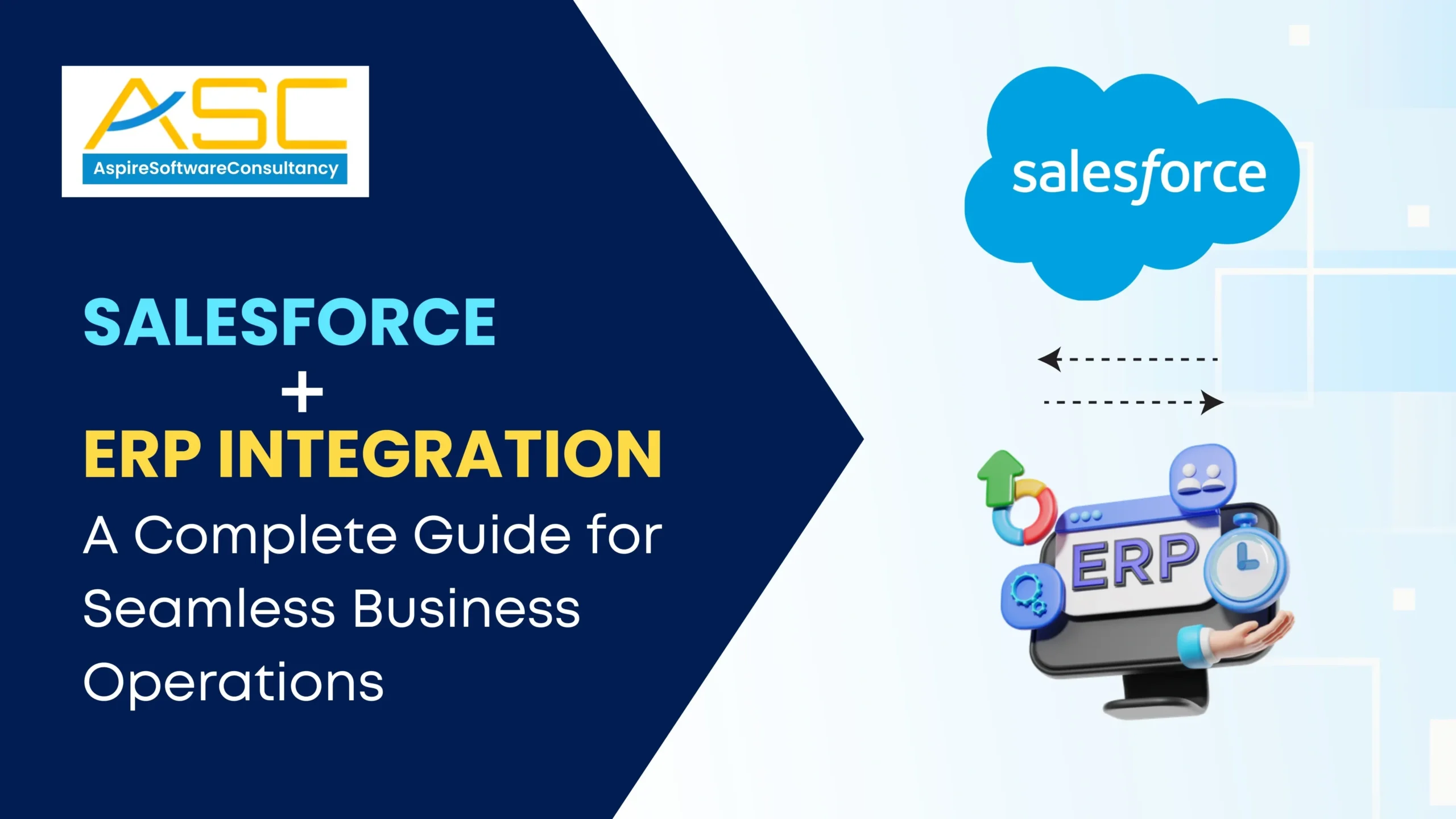
Salesforce integration with ERP systems refers to connecting your Customer Relationship Management (CRM) platform with your Enterprise Resource Planning (ERP) system. While Salesforce manages customer interactions, sales pipelines, and marketing, ERP systems handle finance, inventory, supply chain, and operations.
When integrated, these systems share real-time data, creating a single source of truth across the organization.
Why Businesses Need CRM and ERP Integration
Disconnected systems create inefficiencies that slow down business growth. Integrating CRM and ERP bridges this gap and ensures seamless communication between departments.
Key CRM and ERP Integration Benefits
- Real-Time Data Synchronization
Eliminate manual data entry and ensure consistent data across platforms. - Improved Customer Experience
Sales and support teams gain access to accurate order history, billing, and inventory data. - Better Decision-Making
Unified dashboards provide insights into sales, finance, and operations. - Enhanced Productivity
Automation reduces repetitive tasks and frees up valuable time. - Scalability
Integrated systems grow with your business without operational bottlenecks.
How to Integrate Salesforce with ERP
Understanding how to integrate Salesforce with ERP is crucial for a successful implementation. The approach depends on your business needs, system complexity, and scalability goals.
1. Define Business Objectives
Start by identifying what you want to achieve—whether it’s improved reporting, automation, or customer experience.
2. Choose the Right Integration Method
Common methods include:
- API-based integration
- Middleware platforms
- Pre-built connectors
- Custom integration solutions
3. Data Mapping and Standardization
Ensure consistent data formats between Salesforce and your ERP system to avoid duplication and errors.
4. Implementation and Testing
Thorough testing is critical to ensure data flows correctly across systems without disruptions.
5. Deployment and Monitoring
Once deployed, continuously monitor performance and optimize integration processes.
Partnering with expert Salesforce consulting services ensures this process is executed efficiently and securely.
Common ERP CRM Integration Challenges
While integration offers immense benefits, businesses often face certain challenges during implementation.
1. Data Silos and Inconsistencies
Legacy systems may store data in incompatible formats, making integration complex.
2. High Implementation Costs
Custom integrations can require significant investment if not planned correctly.
3. Security Concerns
Ensuring data security and compliance across platforms is critical.
4. System Compatibility Issues
Not all ERP systems easily integrate with Salesforce, requiring middleware or custom solutions.
5. Change Management
Employees may resist adopting new workflows without proper training.
At Aspire Software Consultancy, we address these ERP CRM integration challenges with tailored strategies and proven methodologies.
Best Practices for Successful Salesforce ERP Integration
To maximize the value of your integration, follow these best practices:
- Start Small and Scale Gradually
Begin with core processes and expand integration over time. - Prioritize Data Quality
Clean and standardize your data before integration. - Choose the Right Integration Partner
Reliable Salesforce integration services ensure smooth implementation. - Ensure Security and Compliance
Protect sensitive business and customer data. - Invest in Training
Equip your team to use integrated systems effectively.
Why Choose Aspire Software Consultancy?
At Aspire Software Consultancy, we specialize in delivering robust Salesforce integration services tailored to your business needs. Our expertise ensures seamless integration between Salesforce and ERP systems, helping you unlock the full potential of your technology stack.
What We Offer:
- End-to-end integration strategy and implementation
- Custom and scalable solutions
- Ongoing support and optimization
- Expertise in complex ERP environments
We combine technical expertise with business insights to deliver measurable results.
Final Thoughts
Salesforce integration with ERP systems is no longer optional—it’s essential for businesses aiming to stay competitive in a data-driven world. By eliminating silos and enabling real-time insights, integration empowers organizations to operate more efficiently and deliver exceptional customer experiences.
With the right strategy and expert support from Aspire Software Consultancy, your business can achieve seamless operations and long-term success.
Frequently Asked Questions
Salesforce ERP integration connects CRM and ERP systems to enable seamless data flow and unified business operations.
Key benefits include real-time data access, improved customer experience, better decision-making, and increased efficiency.
The timeline depends on system complexity, data volume, and integration method, typically ranging from a few weeks to several months.
Challenges include data inconsistencies, system compatibility issues, security concerns, and high implementation costs.
Professional Salesforce integration services ensure accurate implementation, reduced risks, and faster deployment.