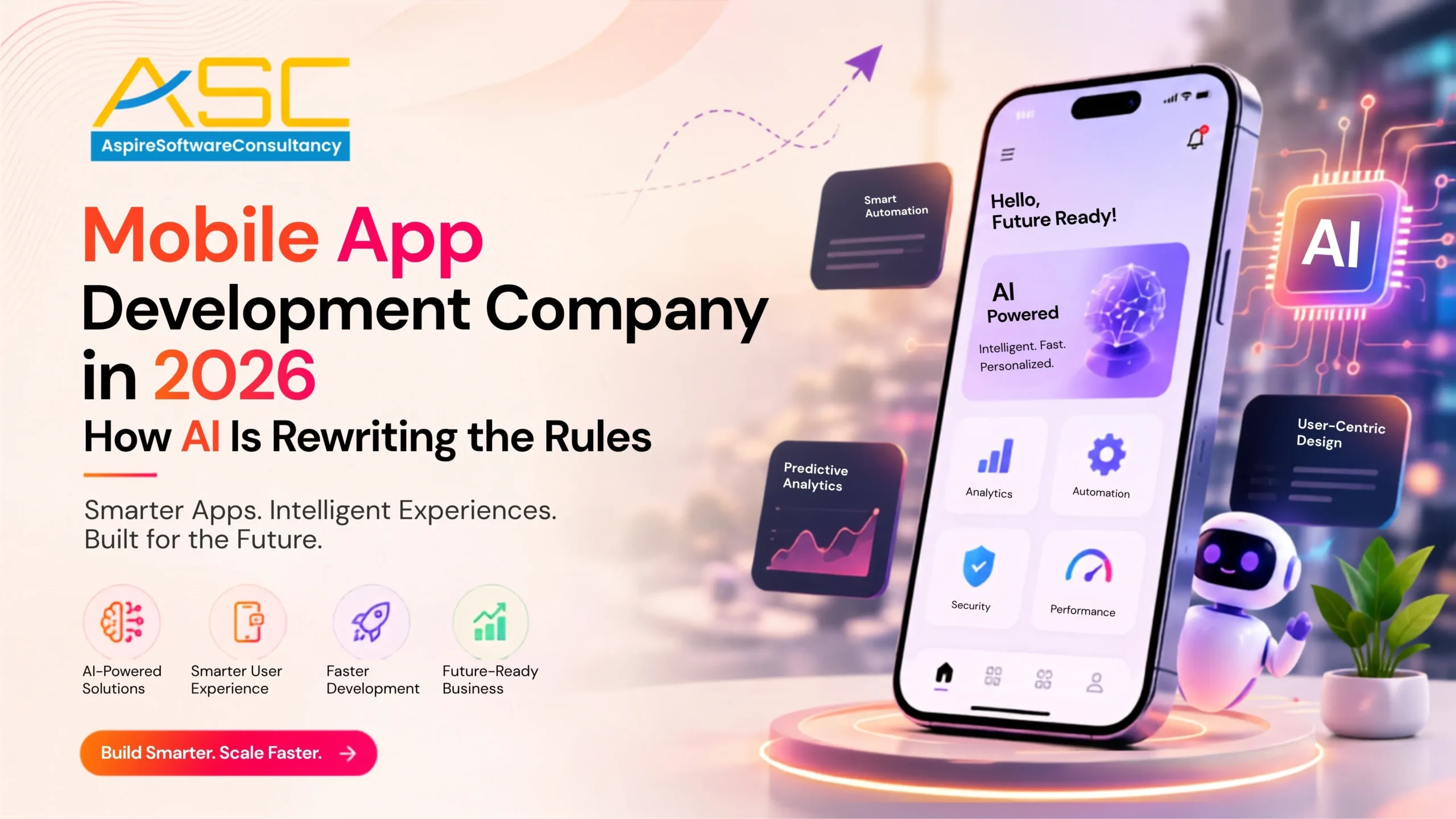
Mobile apps aren’t just “digital brochures” anymore. In 2026, a real mobile app development company builds products that predict what users need, talk back in natural language, and get smarter with every tap. If you’re evaluating partners for your next build, here’s what’s actually changing and what to look for.
Why 2026 Is a Turning Point for Mobile App Development
Global mobile app revenue keeps climbing every year, but the bar for “good enough” has moved. Users now expect apps to feel personal from the first launch thanks largely to on-device AI models and cheaper cloud inference. According to Statista’s mobile app market data, in-app spending and downloads continue to grow steadily worldwide, pushing businesses to invest in smarter, faster, more adaptive apps rather than static feature lists.
For any custom mobile app development company, this means the old playbook wireframe, build, ship, forget no longer works. Apps now need continuous intelligence baked in from day one.
Top Mobile App Development Trends for 2026
1. AI-Native Apps, Not AI-Bolted-On Apps
The biggest shift this year is AI mobile app development moving from a “nice-to-have chatbot” to the actual architecture of the app. On-device large language models, smart recommendation engines, and voice-first interfaces are now core requirements from clients, not add-ons requested at the end of a project.
2. Cross-Platform Still Wins on Speed
Flutter and React Native continue to dominate builds where speed-to-market matters, letting an Android and iOS app development company ship one codebase across both platforms without sacrificing performance.
3. Super Apps and Embedded Finance
More businesses want a single app that handles bookings, payments, chat, and loyalty instead of five separate apps. This trend is driving demand for enterprise mobile app development with modular, API-first architecture.
4. Privacy-First, On-Device Processing
With tightening data regulations, more AI processing is happening directly on the device instead of the cloud, reducing latency and protecting user data, a priority Apple has publicly emphasized in its ongoing privacy initiatives.
5. Hyper-Personalization at Scale
Machine learning models now adjust UI, content, and offers per user in real time, turning generic apps into something that feels custom-built for each person using it.
What to Look For in a Mobile App Development Company
Not every agency that says “we build apps” can deliver on 2026-level expectations. When choosing a partner, check for:
- Proven AI integration experience not just app development, but real machine learning and automation work
- Cross-platform expertise in Flutter, React Native, Swift, and Kotlin
- Scalable backend architecture built for growth, not just an MVP
- Security-first development, especially for healthcare, fintech, and enterprise apps
- Post-launch support for updates, performance tuning, and AI model improvements
At Aspire Software Consultancy, our mobile app development services combine 16+ years of engineering experience with modern AI capabilities, helping startups and enterprises alike ship apps that are genuinely intelligent, not just responsive. Our AI consulting and automation services work hand-in-hand with our mobile team to build apps that learn from real user behavior.
A Quick Look at the Process
- Discovery & Strategy — Understanding your users, business goals, and where AI genuinely adds value (not where it’s just a buzzword)
- UI/UX Design — Designing interfaces that stay simple even as intelligence increases
- Development — Agile sprints across cross-platform or native stacks
- AI/ML Integration — Recommendation engines, chat interfaces, predictive features
- Testing & Launch — Performance, security, and App Store/Play Store compliance
- Post-Launch Growth — Monitoring, updates, and continuous model improvement
Final Thoughts
The mobile app development company you choose in 2026 will directly shape whether your app feels outdated in a year or keeps evolving with your users. AI is no longer optional it’s the baseline. Businesses that pair strong engineering with real AI capability are the ones pulling ahead.
Ready to build a mobile app that thinks ahead? Schedule a free consultation with our team, or explore our full portfolio of projects to see what we’ve built for clients across 12+ countries.
Frequently Asked Questions
One cross-platform app usually works best for most businesses. It’s cheaper to build and easier to maintain. Separate native apps make sense only if you need very specific device features or top-tier performance.
Yes, most apps can add AI later without a full rebuild. A good developer builds the backend to support future features like chat, search, or personalization. This keeps costs lower than starting over.
Flutter and React Native remain popular for cross-platform builds. Swift and Kotlin are common for native apps. On the backend, Node.js, Python, and cloud platforms like AWS or Firebase are widely used.
Start with a small, focused version of the idea, often called an MVP. This lets you test demand before spending on a full build. A good development partner will help validate the idea first.
Healthcare, fintech, e-commerce, and logistics see the biggest gains. These industries use apps for real-time tracking, secure payments, and personalized user experiences.