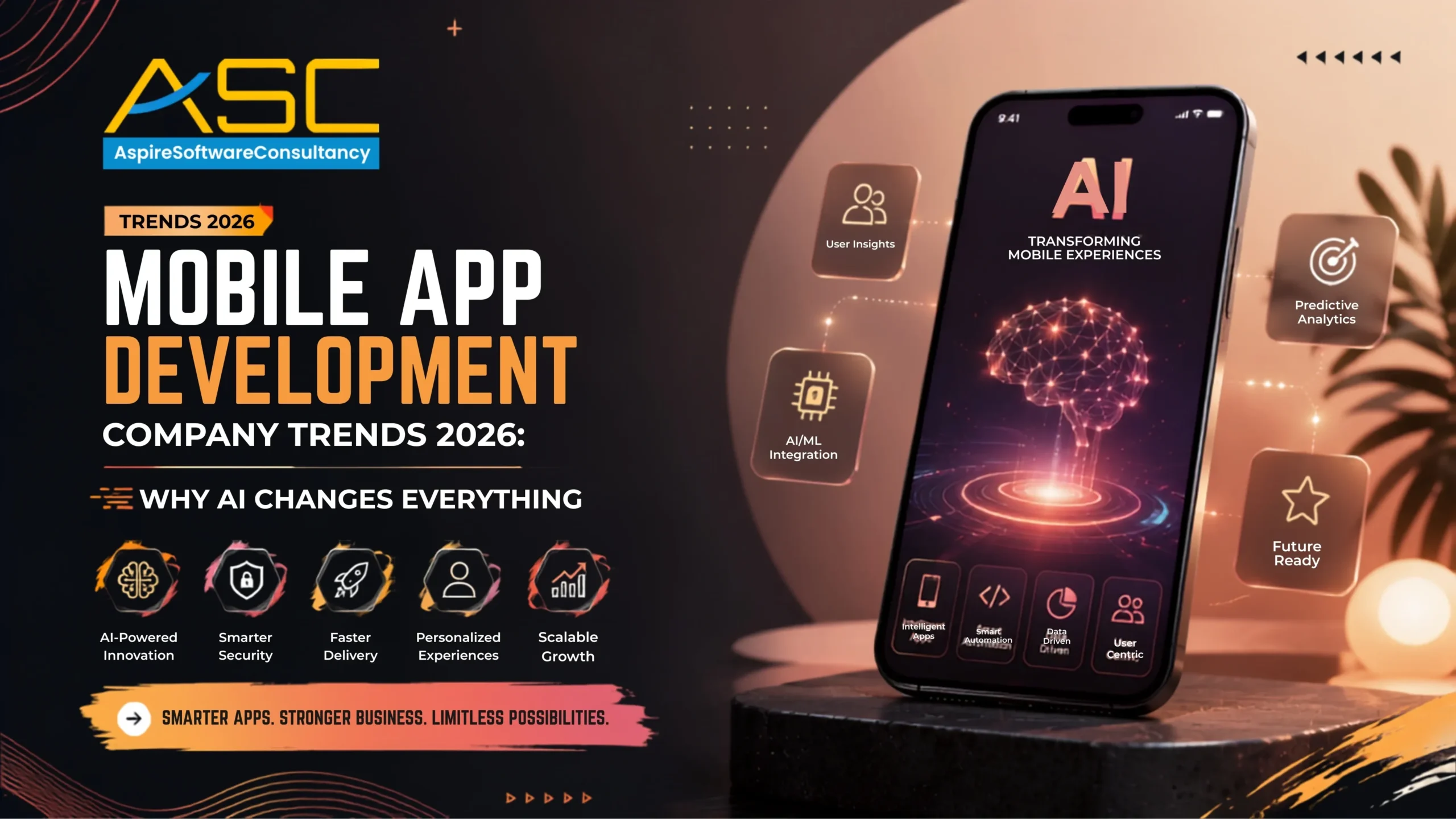
If you’re evaluating a mobile app development company in 2026, one thing is clear: AI isn’t optional anymore. It’s the baseline. Businesses that once asked “should we add AI?” are now asking “how deep should AI go?” from onboarding to personalization to backend automation.
This shift is redefining what good mobile app development services actually look like, and it’s changing how businesses should evaluate a potential development partner.
Why 2026 Is a Turning Point for Mobile App Development
App downloads have plateaued in many markets, but revenue and engagement keep climbing. That tells us something important: growth today comes from smarter apps, not just more apps. A modern mobile app development company is expected to build products that retain users through personalization, automation, and predictive experiences, not just a clean UI.
According to Sensor Tower’s State of Mobile 2026 report, in-app purchase revenue and time spent both hit record highs even as new downloads slowed, a sign that intelligent, engagement-driven apps are winning. (Source: Sensor Tower)
Top Mobile App Development Trends for 2026
1. AI-First App Architecture
Instead of bolting AI onto a finished app, forward-thinking teams design AI into the product from day one smarter recommendations, predictive UX, and automated workflows built into the core. We covered this shift in detail in our piece on AI-first mobile app development.
2. Machine Learning in Specialized Industries
Healthcare, fintech, and logistics apps are using ML for fraud detection, diagnostics support, and predictive insights. Our breakdown of machine learning in healthcare apps shows how compliance and intelligence now go hand in hand.
3. Super Apps and Enterprise Mobility
Enterprises want fewer, more powerful apps instead of many disconnected tools. Enterprise-grade custom mobile app development is now central to digital transformation strategies, especially for large organizations managing complex workflows.
4. Voice, AR, and Conversational Interfaces
Voice-enabled and AR-powered features are gaining real traction in retail, real estate, and health apps, pushing engagement time noticeably higher than traditional interfaces.
5. AI-Powered Testing and Faster Time-to-Market
Automated QA and AI-assisted testing are shortening development cycles, letting teams ship reliable updates faster without sacrificing quality, a key advantage any competitive top mobile app development company should offer.
How to Choose the Right Mobile App Development Company
When comparing vendors, look beyond the portfolio and ask:
- Do they design with AI and data strategy from the start, or add it later?
- Can they show real experience in your industry (healthcare, fintech, retail, enterprise)?
- Do they support the full lifecycle web application development, backend, and mobile, together?
- What’s their track record on enterprise mobile app development and scalability?
Picking a partner who treats AI as infrastructure, not a feature, is the single biggest differentiator this year.
Why Aspire Software Consultancy
Aspire Software Consultancy builds mobile app development services with AI woven into strategy, design, and deployment not added as an afterthought. From startups to enterprises, our teams focus on measurable outcomes: better retention, faster releases, and apps that actually adapt to user behavior. Explore how our approach has driven business growth through custom mobile app development for our clients.
Final Thoughts
The mobile app development company you choose in 2026 should think like a product partner, not just a build shop. AI-first thinking, industry expertise, and a full-lifecycle approach separate the leaders from the rest.
Talk to Aspire Software Consultancy about building your next AI-powered mobile app.
Frequently Asked Questions
Costs vary based on complexity, platform (iOS, Android, or both), and AI features required. Simple apps start lower, while AI-powered or enterprise-grade apps require higher investment due to added intelligence layers.
Cross-platform frameworks have matured significantly and now support advanced AI features well, making them a cost-effective choice for most businesses. Native is still preferred for apps needing deep hardware-level performance (e.g., AR/VR, gaming).
Most existing apps can be upgraded with AI features like recommendations, chatbots, or predictive analytics without a full rebuild. A good mobile app development company will assess your current architecture first.
If your app collects user behavior data, handles repetitive decisions, or competes in a crowded category, AI features (personalization, automation, predictions) usually deliver a clear engagement and retention advantage.