

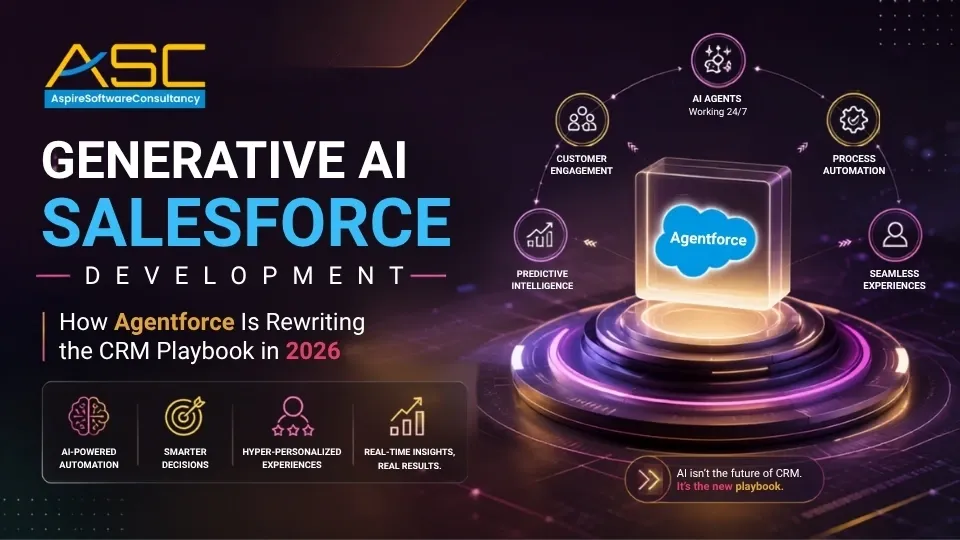
Generative AI Salesforce Development: How Agentforce Is Rewriting the CRM Playbook in 2026
Salesforce isn’t just adding AI features anymore it’s rebuilding the CRM around them. Generative AI Salesforce development has moved from experimental pilots to production-grade agents that write emails, resolve support tickets, score leads, and update records without a human clicking a single button. If you’re a business leader wondering whether it’s time to invest, this guide breaks down what’s actually happening with generative AI in Salesforce in 2026 and how to get started the right way. What Is Generative AI Salesforce Development? Generative AI Salesforce development refers to building custom AI agents, Apex logic, and workflows on Salesforce that use large language models to generate content, predict outcomes, and take autonomous action instead of just following static rules. This includes: Custom Agentforce agents for sales, service, and marketing AI-generated emails, case summaries, and knowledge articles Predictive lead scoring and next-best-action recommendations Natural-language reporting and dashboard generation Voice- and chat-based customer self-service Unlike older Salesforce automation (Flow, Process Builder), generative AI doesn’t just execute predefined steps it interprets context and decides what to do next. Why 2026 Is a Turning Point for AI-Powered Salesforce CRM A few shifts are driving adoption this year: 1. Agentforce Has Left the Pilot Stage Organizations are no longer testing AI agents in isolated sandboxes they’re running them in live production environments. The real focus for 2026 projects has shifted from flashy demos to fundamentals: clean data, tight permissions, and a handful of automated workflows done properly. 2. Agents Are Becoming Autonomous, Not Just Assistive Early AI agents mostly suggested actions for a human to approve. That’s changing fast. Agentforce is shifting toward agents that can act on their own updating records, scheduling meetings, escalating issues, or routing leads based on real-time behavior all within defined safety guardrails. 3. Hyper-Personalization Is the New Baseline AI-powered CRM platforms like Agentforce can now analyze a customer’s history, buying behavior, and service interactions to deliver tailored responses and recommendations. This level of personalization is quickly becoming the standard for modern CRM rather than a differentiator. 4. Real-Time Data Is Fueling Smarter Decisions By anchoring agent decisions in Data Cloud instead of relying on isolated AI outputs, businesses can trigger real-time actions like responding to a cart abandonment the moment it happens instead of waiting for the next batch cycle. Top Use Cases for Generative AI in Salesforce Development Use Case What It Does AI Sales Agents Draft follow-up emails, summarize calls, auto-update Opportunity records Service Agentforce Bots Resolve tier-1 support tickets and escalate complex cases instantly Predictive Lead Scoring Rank leads using behavioral and historical CRM data AI-Generated Reports Convert plain-language questions into dashboards and insights Marketing Content Agents Generate personalized campaign copy at scale using Data Cloud signals Key Challenges Businesses Should Plan For Generative AI Salesforce development isn’t plug-and-play. Before rollout, address: Data readiness — messy or duplicate CRM data leads to inaccurate AI outputs Governance — defining who owns an agent and what it’s allowed to do Permissions and security — especially for autonomous, record-editing agents Cost forecasting — consumption-based AI pricing can scale unpredictably Getting these fundamentals right is often the difference between a successful Agentforce rollout and a stalled one. How to Get Started with Generative AI Salesforce Development Audit your current Salesforce setup objects, automations, and data quality. Pick one high-impact workflow (like case triage or lead follow-up) instead of a full org rebuild. Build with governance in mind from day one logging, permissions, human review points. Partner with a certified Salesforce AI consulting team to avoid costly rework. At Aspire Software Consultancy, we help businesses design, build, and govern generative AI Salesforce development projects from Agentforce agent design to full CRM automation strategy through our AI consulting and automation services. Final Thoughts Generative AI Salesforce development is no longer a future trend it’s how competitive teams are running sales, service, and marketing in 2026. The businesses winning right now are the ones treating AI as infrastructure, not an add-on: clean data, clear governance, and one workflow done well before scaling further. Want to see where AI-powered CRM fits into your Salesforce environment? Talk to our Salesforce AI team or explore how we’re already helping clients with Salesforce AI automation services and AI-powered Salesforce CRM solutions. Frequently Asked Questions What is generative AI Salesforce development? It’s the practice of building AI agents, Apex logic, and workflows on Salesforce that use large language models to generate content, predict outcomes, and take autonomous action like Agentforce agents that draft emails or resolve cases without manual triggers. Is Agentforce the same as generative AI? Not exactly. Agentforce is Salesforce’s agent-building platform; generative AI is the underlying technology that powers what those agents can write, predict, and decide. Agentforce is how you deploy generative AI inside Salesforce. How much does Salesforce AI development cost in 2026? Costs vary based on scope; a single automated workflow (like case triage) costs far less than a full Agentforce rollout across sales, service, and marketing. Consumption-based AI pricing also means ongoing usage costs scale with agent activity, so most teams start with one high-impact use case before expanding. Do we need to rebuild our Salesforce org to use generative AI? No. Agentforce and most generative AI tools can be introduced into an existing Salesforce environment. A consultant typically starts by auditing your current objects, automations, and data quality rather than requiring a rebuild. What’s the biggest risk with AI agents in Salesforce? Ungoverned autonomy. Agents that can update records or trigger actions need clear permissions, audit logging, and defined ownership without that, mistakes scale as fast as the automation does. Facebook Instagram Youtube Linkedin X-twitter