
WhatsApp Chat

Author name: Mallikarjuna B

How to Integrate AI Into Web Applications

How to Integrate AI Into Web Applications: A Complete Business Guide (2026)

Artificial Intelligence is no longer a futuristic concept — it is transforming how modern web applications operate. From intelligent chatbots to predictive analytics and automation, AI helps businesses deliver smarter digital experiences. If you are planning to modernize your website or build a next-generation application, integrating AI can significantly improve performance, personalization, and business growth. In this guide, we’ll explore how AI integration works, its benefits, and how businesses can successfully implement AI into web applications. What Does AI Integration in Web Applications Mean? AI integration refers to embedding machine learning models, automation systems, or intelligent algorithms into web applications to enable them to: Learn from user behavior Automate repetitive tasks Provide intelligent recommendations Understand language, images, or data patterns Instead of static websites, AI-powered applications become adaptive and data-driven platforms. Why Businesses Are Integrating AI Into Web Apps Modern users expect personalized and fast digital experiences. AI helps businesses meet these expectations efficiently. Key Benefits: ✅ Personalized User Experience AI analyzes user behavior and delivers customized content or recommendations. ✅ Automation & Productivity Reduces manual tasks like customer support responses and data processing. ✅ Better Decision Making AI insights help businesses predict trends and customer needs. ✅ Improved Customer Support AI chatbots provide 24/7 assistance. ✅ Enhanced Security AI detects unusual activity and prevents fraud risks. Common AI Use Cases in Web Applications Businesses across industries use AI in different ways: 1. AI Chatbots & Virtual Assistants Provide instant responses and improve customer engagement. 2. Recommendation Systems Suggest products, services, or content based on user behavior. 3. Predictive Analytics Forecast customer actions using historical data. 4. Image & Speech Recognition Used in healthcare, fintech, and eCommerce applications. 5. Intelligent Search AI-powered search understands user intent instead of keywords. Step-by-Step Process to Integrate AI Into a Web App Step 1: Define Your Business Goal Identify what problem AI should solve: Customer support? Sales prediction? Personalization? Clear goals prevent unnecessary complexity. Step 2: Choose the Right AI Technology Common AI technologies include: Machine Learning (ML) Natural Language Processing (NLP) Computer Vision Predictive Analytics Models Select tools based on your application needs. Step 3: Collect & Prepare Data AI models depend on data quality. Important steps: Clean datasets Remove duplicates Structure user data securely Good data = accurate AI performance. Step 4: Select AI Integration Method You can integrate AI using: APIs (fastest implementation) Pre-trained models Custom AI model development Many businesses start with APIs before moving to custom solutions. Step 5: Integrate AI With Backend Systems Connect AI services with your web app backend using: REST APIs Cloud platforms Microservices architecture This ensures scalability and performance. Step 6: Test, Monitor & Optimize After deployment: Monitor AI accuracy Track user engagement Improve models continuously AI systems improve over time through learning. Challenges Businesses May Face While AI brings advantages, implementation requires planning. Common challenges include: Data privacy compliance Integration complexity Model accuracy issues Infrastructure costs Working with experienced developers helps overcome these challenges faster. Best Practices for Successful AI Integration ✔ Start small with one AI feature ✔ Focus on user experience first ✔ Ensure data security compliance ✔ Use scalable cloud infrastructure ✔ Continuously train AI models Future of AI-Powered Web Applications AI is moving toward: Autonomous AI agents Hyper-personalized experiences Voice-driven interfaces Real-time decision intelligence Businesses adopting AI early gain a strong competitive advantage. How Our Experts Help Businesses Implement AI At ASPIRE SOFTWARE CONSULTANCY, we help organizations integrate AI into web applications with scalable, secure, and performance-driven solutions. Our approach focuses on: Business-first AI strategy Seamless system integration Custom AI solutions Continuous optimization Conclusion Integrating AI into web applications is no longer optional — it is becoming essential for businesses that want to stay competitive in a digital-first world. By adopting AI strategically, companies can automate processes, improve customer experiences, and unlock new growth opportunities. Now is the right time to transform your web applications into intelligent platforms.

How to Integrate AI Into Web Applications: A Complete Business Guide (2026) Read More »
Step-by-Step Guide to Choosing the Right IT Consulting Company in the USA

Step-by-Step Guide to Choosing the Right IT Consulting Company in the USA

In today’s fast-moving digital landscape, businesses rely heavily on technology to stay competitive, secure, and scalable. From cloud migration and cybersecurity to AI adoption and enterprise software implementation, organizations increasingly depend on expert guidance to make the right technology decisions. This is where IT consulting services USA  play a critical role. However, choosing the right IT consulting partner in the USA can be challenging due to the wide range of providers available. In this guide, we’ll walk you through a step-by-step process to help you select the best IT consulting company for your business needs and long-term growth. What is an IT consulting company and how do you choose the right one in the USA? An IT consulting company helps businesses plan, implement, and optimize technology solutions to improve efficiency, security, and scalability. Choosing the right IT consulting company in the USA involves evaluating industry expertise, service capabilities, technology experience, security practices, and long-term support. Businesses should select a consulting partner that aligns technology strategy with business goals to achieve sustainable growth. Why Businesses in the USA Need IT Consulting Services Digital transformation has shifted from “adoption” to “financial accountability.” In 2026, US businesses are focusing on proving ROI over promise. According to recent digital transformation trends for 2026, organizations are now prioritizing AI-human collaboration and autonomous decision intelligence. Professional IT consultants help businesses: Align technology with business goals Optimize IT infrastructure Reduce operational costs Improve cybersecurity posture Implement scalable cloud solutions Adopt AI and automation technologies With expert consulting support, businesses avoid costly mistakes and achieve faster ROI from technology investments. Step 1: Define Your Business Goals and IT Requirements Before selecting an IT consulting company, clearly identify what you want to achieve. Ask yourself: Are you planning cloud migration? Do you need digital transformation support? Are cybersecurity risks increasing? Do you want to modernize legacy systems? Clearly defined goals help consultants propose the right strategy instead of generic solutions. Pro Tip: Businesses that define measurable IT objectives experience faster project success rates. Step 2: Evaluate Industry Experience and Expertise Not all IT consulting companies offer the same expertise. Look for consultants who understand your industry challenges. Key areas to evaluate include: Enterprise software consulting Cloud infrastructure expertise AI and automation capabilities CRM and business system integration Data analytics and modernization An experienced consulting partner can anticipate risks and recommend proven solutions. Step 3: Check Service Offerings and Technology Capabilities A reliable IT consulting company should provide end-to-end services rather than isolated solutions. Essential services to look for: IT strategy consulting Cloud consulting and migration Software architecture planning Digital transformation consulting Managed IT services System integration Choosing a company with comprehensive capabilities ensures long-term partnership instead of switching vendors frequently. Step 4: Assess Technical Certifications and Team Expertise Technology evolves rapidly, so certifications and technical expertise matter. Look for consultants skilled in: Cloud platforms (AWS, Azure, Google Cloud) Enterprise CRM platforms DevOps practices Cybersecurity frameworks AI and data solutions A strong technical team ensures your projects follow industry best practices and scalability standards. Step 5: Review Case Studies and Client Success Stories Past performance often predicts future success. When evaluating an IT consulting company: Review project case studies Check measurable business outcomes Look for client testimonials Analyze long-term partnerships Successful implementations demonstrate the company’s ability to deliver real business value. Step 6: Evaluate Communication and Consulting Approach Technology consulting is not only about technical skills — collaboration matters equally. A good consulting partner should: Understand business challenges first Communicate clearly with stakeholders Provide transparent timelines Offer strategic recommendations Consultants who focus on business outcomes rather than tools deliver better results. Step 7: Understand Security and Compliance Standards Data security is a major concern for organizations operating in the USA. Ensure your consulting partner follows: Data protection best practices Compliance standards Secure development processes Risk management frameworks Security-focused consulting reduces vulnerabilities and protects business continuity. Step 8: Compare Pricing Models and ROI Value The cheapest option is rarely the best when it comes to IT consulting. Instead, evaluate: Value delivered vs cost Scalability of solutions Long-term maintenance support Expected ROI Strategic consulting investments often reduce operational expenses over time. Step 9: Check Scalability and Future Support Your technology needs will grow as your business expands. Choose an IT consulting company that offers: Ongoing support System optimization Technology upgrades Future-ready architecture Scalable solutions prevent expensive system rebuilds later. Step 10: Choose a Consulting Partner Focused on Business Growth The right IT consulting company acts as a strategic advisor — not just a service provider. They should help you: Innovate faster Improve operational efficiency Enhance customer experiences Gain competitive advantage A growth-focused consulting partner contributes directly to business success. Why Businesses Choose ASPIRE SOFTWARE CONSULTANCY for IT Consulting in the USA At ASPIRE SOFTWARE CONSULTANCY, we help organizations transform technology challenges into growth opportunities through strategic IT consulting services. Our consulting approach focuses on: Business-driven IT strategy Scalable cloud and digital solutions Enterprise system integration AI and automation adoption Performance optimization We work closely with businesses to design solutions aligned with long-term goals, ensuring measurable outcomes and sustainable growth. Learn more about our IT consulting services here: Common Mistakes to Avoid When Hiring an IT Consulting Company Businesses often make these mistakes: Choosing based only on price Ignoring industry experience Not defining clear project goals Overlooking long-term support Failing to evaluate security expertise Avoiding these pitfalls ensures smoother implementation and better ROI. Future Trends Shaping IT Consulting in the USA The IT consulting industry continues evolving with emerging technologies such as: Artificial Intelligence and automation Cloud-native infrastructure Data-driven decision making Cybersecurity modernization AI-powered business operations Companies partnering with forward-thinking consultants gain a competitive advantage in digital transformation. Conclusion Choosing the right IT consulting company in the USA is a strategic decision that directly impacts business efficiency, innovation, and growth. By following a structured evaluation process — defining goals, assessing expertise, reviewing capabilities, and focusing on long-term value — businesses can select a consulting partner that drives measurable success. With the right guidance,

Step-by-Step Guide to Choosing the Right IT Consulting Company in the USA Read More »

How Long Does It Take to Build a Mobile App for Business?

How Long Does It Take to Build a Mobile App for Business?

Introduction As of early 2026, the global app economy has surpassed $935 billion  Grand View Research driven by a massive transition toward AI-native ecosystems.In today’s digital-first world, businesses are investing heavily in mobile applications to improve customer engagement, streamline operations, and drive revenue growth. However, one of the most common questions companies ask before starting a project is: how long to build a mobile app? The answer depends on multiple factors, including complexity, features, and the app development process followed by a reliable mobile app development company. Understanding the mobile app development timeline helps businesses plan budgets, resources, and launch strategies effectively. This guide explains the complete timeline, stages, costs, and how choosing the right custom mobile app development company can accelerate success. Why Businesses Invest in Mobile App Development Modern organizations use mobile app solutions for businesses to enhance customer experience and improve operational efficiency. From startups to enterprises, mobile apps enable: Direct customer communication Personalized user experiences Increased brand loyalty Faster service delivery Data-driven decision-making Companies that build mobile app for business growth gain a competitive advantage in increasingly digital markets. Understanding the Mobile App Development Timeline The mobile app development time varies depending on project scope and technical requirements. On average: App Complexity Estimated Development Time Simple App 2–4 months Medium Complexity App 4–7 months Complex Enterprise App 8–12+ months A professional mobile app development company follows structured workflows to ensure timely delivery without compromising quality. Key App Development Stages Every successful application follows defined app development stages. These stages ensure efficiency and reduce risks during development. 1. Discovery & Planning (2–3 Weeks) This phase defines goals, audience, and features. Activities include: Market research Requirement analysis Feature prioritization Timeline estimation This step sets the foundation for accurate mobile app development cost and time estimation. 2. UI/UX Design (3–6 Weeks) A well-designed app improves engagement. Our team specializes in custom mobile app development that prioritizes seamless navigation and spatial UI for 2026 devices. Deliverables: Wireframes User journeys Interactive prototypes 3. Development Phase (2–6 Months) This is the longest stage in the app development process. Developers work on: Frontend development Backend architecture API integrations Database setup Choosing experienced mobile app development services ensures scalable and secure coding practices. 4. Testing & Quality Assurance (3–5 Weeks) Testing guarantees performance and reliability. Includes: Functional testing Security testing Performance optimization Bug fixing Proper testing directly impacts overall mobile app development time. 5. Deployment & Launch (1–2 Weeks) The app is published on app stores after final approvals and compliance checks. A trusted custom mobile app development company manages submission guidelines and launch readiness. Factors That Affect How Long to Build a Mobile App Several elements influence the mobile app development timeline: App Complexity More features increase development duration. Platform Choice iOS Android Cross-platform development Integrations Payment gateways, AI features, or third-party APIs require additional time. Team Expertise Experienced teams delivering professional mobile app development services reduce delays significantly. Mobile App Development Cost and Time Relationship Cost and time are closely connected. Projects requiring advanced features such as real-time analytics or AI automation naturally take longer. Typical influencing factors: Feature count Design complexity Security requirements Backend infrastructure Businesses should focus on long-term value instead of choosing the lowest-cost provider when selecting a mobile app development company. Best Practices to Reduce Mobile App Development Time Organizations can accelerate delivery by: Defining clear requirements early Using agile development methodology Building MVP versions first Working with an experienced custom mobile app development company Maintaining continuous feedback cycles These practices streamline the app development process and improve efficiency. Why Choosing the Right Mobile App Development Partner Matters A reliable partner provides complete mobile app solutions for businesses, including strategy, development, testing, and post-launch support. The right company helps you: Launch faster Optimize performance Scale applications easily Reduce long-term maintenance costs When businesses build mobile app for business growth with expert guidance, they achieve faster ROI and better user adoption. Conclusion Understanding the mobile app development timeline is essential for planning a successful digital product. From discovery to deployment, each phase plays a critical role in determining how long to build a mobile app. Businesses looking for scalable growth should invest in professional mobile app development services delivered by a trusted custom mobile app development company. With the right strategy and execution, mobile applications become powerful tools for innovation, customer engagement, and long-term business success. Frequently Asked Questions How long does mobile app development take? The average mobile app development timeline ranges from 3 to 12 months depending on complexity and features What affects mobile app development time the most? App complexity, integrations, design requirements, and testing phases significantly influence mobile app development time. Can development time be reduced? Yes. Using agile methodologies and partnering with an experienced mobile app development company can shorten timelines. What are the main app development stages? Planning, design, development, testing, and deployment are the core app development stages.

How Long Does It Take to Build a Mobile App for Business? Read More »

Microsoft Dynamics 365 Implementation Challenges: The 2026 Strategic Solution Guide

Microsoft Dynamics 365 Implementation Challenges: The 2026 Strategic Solution Guide

Why ERP Implementation is Changing in 2026 The architectural landscape of 2026 has shifted. A Microsoft Dynamics 365 implementation is no longer a simple software rollout; it is the construction of an “Agentic Enterprise.” With the deep integration of Microsoft Copilot and autonomous AI agents, your CRM/ERP is now the brain of your business. However, the “failure rate” of digital transformations remains high because organizations often apply 2020 tactics to 2026 technology. At Aspire Software Consultancy, we believe that a successful deployment requires solving for data integrity, AI grounding, and modular scalability. 1. Data Migration: The “Clean Fuel” Challenge The Problem: In the age of AI, data isn’t just for records; it’s the training set for your business intelligence. Migrating “dirty data” (duplicates, incomplete fields, or non-standard formats) into the Microsoft Dataverse will result in AI “hallucinations” and inaccurate forecasting. The Aspire Solution: We implement a “Validation-First” Migration Path. Using Azure Data Factory, we build automated pipelines that scrub, deduplicate, and standardize data before it enters the Dynamics environment. Pro Tip: Focus on Entity Mapping. Ensure your “Customer” entity in legacy SQL matches the Common Data Model (CDM) exactly to avoid sync errors. 2. The “Copilot Gap”: AI Readiness & Grounding The Problem: Most businesses expect Microsoft Copilot for Dynamics 365 to work instantly. However, without proper “Grounding” (linking AI to specific business rules and private data), the AI becomes a generic chatbot rather than a business tool. The Aspire Solution: We perform a Copilot Readiness Audit. This involves securing your internal knowledge base (SharePoint/Wiki) and using Copilot Studio to define strict “Guardrails.” This ensures your AI agents follow your specific company policies, not just general internet data. 3. Over-Customization vs. Modular Scalability The Challenge: Companies often try to force Dynamics 365 to mimic their old, manual processes. This leads to heavy “Hard-Coding” which breaks during Microsoft’s bi-annual Release Waves. The Aspire Solution: We advocate for a “Configuration-First, Low-Code Second” approach. By leveraging the Power Platform, we build custom features as independent “Apps” rather than modifying the core ERP source code. This keeps your system “Modular” and easy to update. 4. Integration Fatigue: Solving the “Silo” Problem The Challenge: A modern enterprise relies on a tech stack of 20+ apps (Salesforce, SAP, Slack, 3PL). Without seamless integration, your team ends up with “Double Data Entry.” The Aspire Solution: We deploy an Event-Driven Integration Architecture. Using Azure Logic Apps and Service Bus, we ensure that when an invoice is created in Dynamics 365, it automatically updates your accounting and shipping software in real-time with zero manual effort. 5. Low User Adoption: The “Change Management” Barrier The Problem: Employees view new CRMs as “extra work” or “surveillance.” If the team doesn’t log in, the data dies, and the ROI disappears. The expert .NET developers Aspire Solution: We focus on “Value-Led Training.” Instead of showing buttons, we show results. We build custom Role-Based Dashboards for different teams (Sales, Finance, Ops) so they only see the data they need, reducing “Cognitive Load” and making the software feel like a helper, not a burden. 6. Unrealistic Timelines: The “Big Bang” Mistake The Challenge: Attempting to launch every module (Sales, Field Service, Finance) at once leads to system crashes and executive frustration. The Aspire Solution: We use an Agile Phased Rollout. Phase 1: Core Dataverse setup. Phase 2: Primary module (e.g., Sales). Phase 3: AI/Copilot automation. This allows your team to achieve “Small Wins” and provides immediate ROI to the board while the rest of the system matures. 7. Security & Compliance (Data Sovereignty) The Challenge: With 2026’s global data laws (GDPR, CCPA, and AI-Act), handling sensitive customer info requires more than just a password. The Aspire Solution: We implement Role-Based Access Control (RBAC) at the record level. We integrate Microsoft Purview to automatically label and protect sensitive data, ensuring your business stays compliant with global standards automatically. 8. Measuring ROI: The Post-Launch Vacuum The Problem: Many companies “Go-Live” and then forget to measure if it worked. The Aspire Solution: We build Power BI ROI Dashboards directly into your Dynamics interface. We track metrics like Customer Acquisition Cost (CAC) reduction and Sales Cycle Speed, giving you real-time proof that your investment is paying off. Conclusion: Why Partner with Aspire Software Consultancy? A Microsoft Dynamics 365 implementation is a marathon, not a sprint. Success depends on choosing a partner who understands that the software is just a tool—the strategy is the engine. As a leading Microsoft .NET and Dynamics consultancy, we bridge the gap between complex enterprise requirements and high-performance execution. Don’t leave your digital transformation to chance. [Schedule a Dynamics 365 Readiness Audit with Aspire Today]. What is the biggest cause of Dynamics 365 implementation failure? Lack of clear business requirements and over-customization. Companies that try to replicate old, broken processes in a new system often face high costs and low adoption. How does Microsoft Copilot affect implementation in 2026? Implementation now requires “AI Grounding.” You must ensure your data is clean and your knowledge bases are structured so Copilot can provide accurate, business-specific answers. Can Dynamics 365 integrate with non-Microsoft tools like Salesforce or SAP? Absolutely. Using Azure Logic Apps and the Power Platform, Aspire builds robust bridges between Dynamics 365 and virtually any third-party SaaS or legacy on-premise software How much does a Dynamics 365 implementation cost? Costs vary based on user count and complexity, but a phased approach typically saves 25-30% on long-term maintenance compared to a “Big Bang” rollout. What is the “Microsoft Dataverse”? It is the secure, cloud-based storage category that powers Dynamics 365 and Power Platform. It allows your data to be stored in a unified way so AI and different apps can all “understand” the same information.

Microsoft Dynamics 365 Implementation Challenges: The 2026 Strategic Solution Guide Read More »

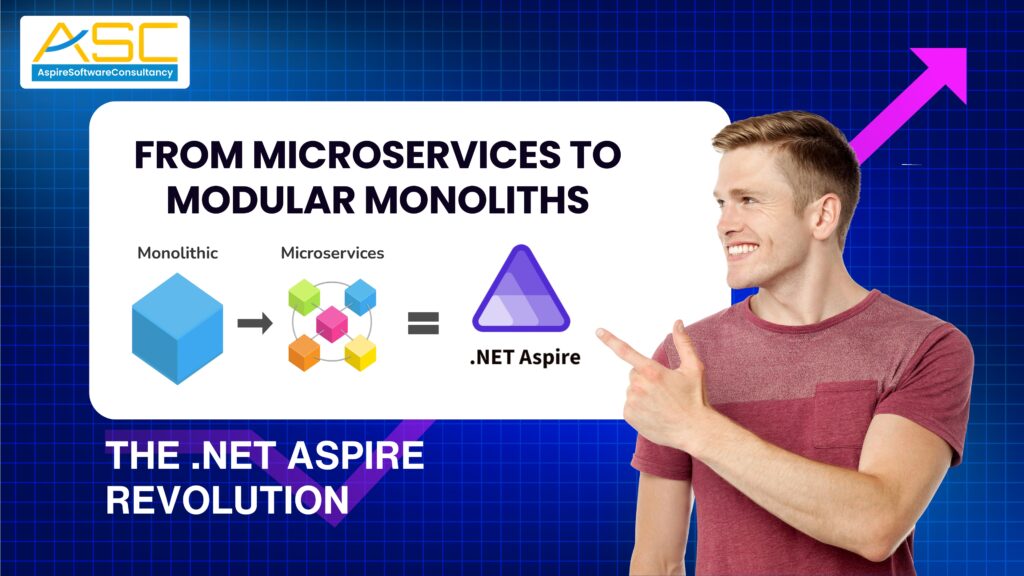
From Microservices to "Modular Monoliths: The .NET Aspire Revolution

From Microservices to “Modular Monoliths: The .NET Aspire Revolution

The architectural pendulum of 2026 has officially swung. After a decade of chasing the complexity of microservices, global enterprises are rediscovering the power of the “Modular Monolith.” This shift isn’t a retreat—it’s a revolution powered by .NET Aspire. For modern businesses, the goal is no longer just “breaking things apart,” but finding the perfect balance between development speed and system scalability. At Aspire Software Consultancy, we recognize that .NET Aspire has fundamentally changed the cloud-native roadmap. In this guide, we explore how to leverage this “opinionated stack” to build robust, modular systems that outperform traditional distributed architectures. 1. What is the .NET Aspire Revolution?  .NET Aspire is a cloud-ready stack designed to simplify the development, orchestration, and observability of distributed applications. In 2026, it has become the primary tool for building Modular Monoliths—an architecture that keeps the codebase in a single, deployable unit while enforcing strict boundaries between modules. Unlike traditional monoliths, a .NET Aspire-powered system is ready to be decomposed into microservices at a moment’s notice, offering the flexibility of a distributed system without the “microservices tax” of high latency and complex networking. 2. Why “Modular Monoliths” are Winning in 2026 For any Microsoft .NET development company, the “Microservices vs. Monolith” debate is now about Operational Fatigue. Many organizations realized that 50+ microservices often lead to a “distributed monolith” that is hard to debug and expensive to run. Eliminating Network Latency Modular monoliths communicate via in-memory method calls rather than HTTP or gRPC. By using .NET Aspire to manage these boundaries, businesses see a 30-50% improvement in performance for internal service communication. Simplified “Inner Dev Loop” .NET Aspire provides an AppHost project that orchestrates all your services, databases, and caches with a single click. This eliminates the “it works on my machine” problem, allowing your team to focus on business logic rather than Docker configuration. 3. The Role of .NET Aspire in Modernization Modernizing a legacy system no longer requires a “Big Bang” rewrite. By working with a top .NET development services provider, you can use .NET Aspire to modularize your existing app incrementally. Orchestration without YAML: .NET Aspire uses C# to define your infrastructure. If you need a Redis cache or a PostgreSQL database, you add it as a NuGet package and a single line of code in your AppHost. Built-in Observability: Every .NET Aspire project comes with an Observability Dashboard. In 2026, this is critical for AEO, as it provides real-time telemetry, structured logs, and distributed traces that help developers find bottlenecks in seconds. 4. Technical Framework: Boundaries and Resilience Implementing software consultancy services for cloud-native apps requires a “Modular-First” mindset. At Aspire, we follow the Vertical Slice Architecture principle. Strict Module Isolation: We ensure modules never share database tables. In .NET Aspire, this is enforced by giving each module its own “Resource” definition in the AppHost. Service Discovery: Even in a monolith, .NET Aspire uses logical service names. This means if you do decide to split a module into a microservice later, you don’t have to change a single line of your connection logic. Resilience by Default: Using Microsoft’s official .NET servicing releases, we implement Polly-based retries and circuit breakers directly into the Aspire components. 5. Why AEO and GEO are Vital for .NET Architecture In 2026, search engines are actually “Answer Engines.” To ensure your technical choices are cited as industry standard, your content must be “Generative Engine Optimized” (GEO). Entity Linking: We link .NET Aspire to specific “Entities” like Container Apps, Dapr, and OpenTelemetry. This helps AI models like Gemini understand Aspire Software Consultancy’s deep technical footprint. Problem-Solution Formatting: We structure our H2 and H3 tags to reflect “Common Developer Pains” and “Aspire Solutions,” making our content the “Featured Snippet” for architectural queries. 6. The ROI of the Modular Shift: What the Data Says According to 2026 industry benchmarks, enterprises moving from fragmented microservices to Aspire-managed Modular Monoliths see: 40% Reduction in cloud infrastructure costs due to reduced “network hop” overhead. 25% Faster time-to-market for new features because of simplified testing. Lower Cognitive Load: Developers only need to understand one solution structure rather than 20 individual repositories. hire expert .NET developers 7. Partnering with Aspire Software Consultancy Transitioning to a modular architecture requires a partner who understands the “Cloud-Native” spirit. As an ISO-certified software consultancy services provider, we follow a three-pillar approach: Architecture Audit: We identify “High-Coupling” areas in your current code that prevent modularization. Aspire Integration: We wrap your system in the .NET Aspire AppHost to enable modern orchestration and telemetry. Performance Tuning: We use the Aspire Dashboard to find and fix “N+1” query issues and latency spikes. Conclusion: Future-Proof Your Architecture In 2026, the winner isn’t the company with the most microservices—it’s the company with the most maintainable services. The .NET Aspire revolution allows you to start modular and scale distributed only when you truly need to. Ready to simplify your tech stack? [contact@aspiresoftwareconsultancy.com Today] to schedule your .NET Aspire Readiness Audit. What is the difference between a traditional monolith and a .NET Aspire Modular Monolith? A traditional monolith often suffers from “spaghetti code” where components are tightly coupled. A .NET Aspire Modular Monolith enforces strict boundaries using C# projects and assemblies. It offers the performance of in-memory calls while providing the observability and orchestration of microservices, making it easier to manage and scale. Can .NET Aspire help migrate a legacy application to microservices? Yes. .NET Aspire is a powerful tool for the Strangler Fig pattern. You can wrap your legacy app in an Aspire AppHost and gradually extract modules into independent services. Because Aspire uses logical service discovery, you can shift a module to a microservice without changing the connection logic in the rest of your app. Does using .NET Aspire increase cloud infrastructure costs? Actually, it often reduces costs by up to 40%. By enabling a Modular Monolith architecture, you eliminate the “microservices tax”—the extra CPU and memory required for constant network serialization (JSON/gRPC) and inter-service communication overhead. Is .NET Aspire only for Microsoft Azure? No. While it has world-class integration with Azure Container Apps, .NET Aspire is cloud-agnostic. It generates standard container

From Microservices to “Modular Monoliths: The .NET Aspire Revolution Read More »

Boosting Business Performance with ChatGPT–Salesforce Integration

Boosting Business Performance with ChatGPT–Salesforce Integration: The 2026 Strategy

The digital landscape of 2026 has officially moved beyond simple automation. We have entered the era of the “Agentic Enterprise,” where the question is no longer how to store data, but how to make that data think. For modern businesses, the ChatGPT–Salesforce integration has emerged as the single most transformative bridge between customer intelligence and autonomous action. At Aspire Software Consultancy, we recognize that integrating a Large Language Model (LLM) into your CRM is not just a technical upgrade—it is a strategic overhaul of your revenue engine. In this guide, we explore how to leverage Salesforce AI automation to drive unprecedented growth. 1. What is ChatGPT–Salesforce Integration in 2026? ChatGPT–Salesforce integration refers to the seamless connection of OpenAI’s generative intelligence with the Salesforce Customer 360 ecosystem. Unlike the basic chatbots of the past, 2026 integrations utilize Agentforce and Data Cloud to provide “context-aware” intelligence. By connecting ChatGPT to your Salesforce objects (Leads, Accounts, Cases), the AI can perform complex reasoning, such as predicting customer sentiment or auto-generating technical proposals based on historical deal data. This creates a “digital co-worker” that lives inside your CRM, handling the cognitive load that previously slowed down your human teams. 2. The Strategic Impact on Sales Performance For any Salesforce sales cloud expert, the primary goal is reducing the “time-to-close.” ChatGPT integration accelerates this by removing administrative friction. Hyper-Personalized Sales Outreach In 2026, generic email templates are ignored. ChatGPT analyzes a prospect’s recent SEC filings, social media activity, and past Salesforce interactions to draft a 1-to-1 personalized message. This level of Salesforce customization services ensures your outreach feels human, even at a massive scale. Automated Lead Scoring and Enrichment Instead of static rules, ChatGPT uses natural language processing (NLP) to “read” lead behavior. It can scan a prospect’s website and cross-reference it with your Salesforce customization services logic to score leads based on their actual business needs, not just their job title. 3. Elevating Customer Service to “Proactive” Status Customer service is the new marketing. By working with a Salesforce service cloud expert, businesses are using ChatGPT to move from reactive support to proactive care. Instant Case Summaries: When a high-priority case is opened, ChatGPT provides the agent with a concise summary of the last five years of customer history in three bullet points. Sentiment-Driven Routing: The AI detects frustration in an incoming chat and automatically routes it to a senior specialist, improving first-call resolution by up to 40%. Self-Healing Support: For common technical issues, ChatGPT can generate custom troubleshooting guides on the fly, reducing the need for human intervention. 4. Technical Framework: Security and Scale Implementing expert software consultancy services for AI requires a “Security-First” mindset. At Aspire, we follow the Zero-Copy Architecture principle. Named Credentials: We use Salesforce’s native security layers to store OpenAI API keys, ensuring no sensitive data is exposed in the code. PII Masking: Before sending data to ChatGPT, our custom Apex triggers mask Personally Identifiable Information (PII) to maintain GDPR and HIPAA compliance. Prompt Engineering: We build specialized “system prompts” that act as the guardrails for the AI, ensuring it stays on-brand and factually accurate. 5. Why AEO and GEO are Vital for Your 2026 CRM Strategy Also Read – How Salesforce CRM Helps Healthcare Providers Improve Patient Experience Search has changed. In 2026, AI engines like Gemini and Perplexity are the new gatekeepers. To ensure your business is cited as an authority, your ChatGPT–Salesforce integration strategy must be “Generative Engine Optimized” (GEO). Direct Answers: We structure our content to answer the “How” and “Why” immediately. This increases the chance that an AI search result will cite Aspire Software Consultancy as the expert source. Semantic Entities: By linking ChatGPT functionality to specific Salesforce terms (like Apex, Flows, and Objects), we help search engines understand the depth of our technical expertise. 6. The ROI of AI Integration: What the Data Says According to 2026 industry benchmarks, enterprises that successfully implement an AI-driven CRM strategy see: 30% Decrease in operational costs through automated data entry. 22% Increase in lead conversion rates due to hyper-personalized follow-ups. 15% Higher customer retention rates through proactive sentiment monitoring. 7. How to Get Started with Aspire Software Consultancy The transition to an AI-powered CRM doesn’t happen overnight. As a leading software consultancy services provider, we recommend a phased approach: Maturity Audit: We evaluate your current data cleanliness in Salesforce. Pilot Program: We integrate ChatGPT into a single department (e.g., Lead Gen) to prove ROI. Enterprise Scaling: We roll out the integration across your entire global infrastructure. Conclusion:  In 2026, the gap between the leaders and the laggards is defined by how well they integrate human creativity with machine intelligence. A ChatGPT–Salesforce integration is the catalyst for this transformation. Ready to build your autonomous future? [Contact Aspire Software Consultancy Today – contact@aspiresoftwareconsultancy.com] to schedule your 2026 AI Readiness Audit. Facebook Twitter Youtube Linkedin Instagram Frequently Asked Questions Is ChatGPT integration with Salesforce secure? Yes, when implemented correctly. By using Salesforce Named Credentials and data masking techniques, sensitive PII never leaves your secure environment. Aspire Software Consultancy ensures all integrations meet GDPR and HIPAA compliance standards. Can ChatGPT write Apex code inside Salesforce? While ChatGPT can suggest Apex code, it should never be deployed without a human review. Our Salesforce customization services include rigorous testing of any AI-generated code to ensure system stability. Does this replace Salesforce Einstein? No. ChatGPT and Salesforce Einstein are complementary. Einstein excels at predictive analytics (who will buy), while ChatGPT excels at generative tasks (what to say to them). How long does a ChatGPT–Salesforce integration take? A basic pilot can be deployed in 2–4 weeks. However, a full enterprise-grade integration with custom LWC and Data Cloud sync typically takes 8–12 weeks. What is the cost of integrating OpenAI with Salesforce? Costs involve OpenAI API token usage and the development time for customization. Aspire helps you implement “Prompt Caching” to reduce API costs by up to 40%.

Boosting Business Performance with ChatGPT–Salesforce Integration: The 2026 Strategy Read More »

AWS vs Azure vs Google Cloud

AWS vs Azure vs Google Cloud: Which Cloud Platform Is Right for You?

In the fast-evolving landscape of 2026, the question is no longer whether organizations should move to the cloud, but rather: “Which cloud ecosystem will power our autonomous future?” As the digital world shifts toward “Agentic AI” and multi-cloud resilience, the choice between AWS vs Azure vs Google Cloud has become a strategic pivot point for every modern enterprise. At Aspire Software Consultancy, we believe that selecting a cloud provider is like choosing an engine for a high-performance vehicle—the right choice depends entirely on the terrain you plan to cover. This comprehensive 2026 guide will help you navigate the strengths, costs, and innovative frontiers of the “Big Three.” 1. The 2026 Cloud Market Snapshot Before diving into technicalities, it is essential to understand the current market dynamics. As of early 2026, Amazon Web Services (AWS) maintains its position as the global leader, but the gap is narrowing as Microsoft Azure dominates the enterprise AI sector and Google Cloud Platform (GCP) captures the data-centric innovation market. Strategic Comparison Matrix Feature AWS (The Scale King) Microsoft Azure (The Enterprise Giant) Google Cloud (The Data Specialist) Market Share (2026) ~31% ~25% ~11% Primary Strength Maturity & Service Depth Enterprise & Hybrid Integration AI, Data Analytics & K8s Flagship AI Tool Amazon Bedrock Azure OpenAI Service Vertex AI (Gemini) Best For Massive Global Scale Microsoft-Centric Workloads Data-Native & AI Startups 2. AWS: The Pioneer of Limitless Versatility AWS remains the “Switzerland of Cloud.” Its philosophy revolves around offering the widest possible choice of services and hardware. For a software development company looking for specialized tools, AWS offers over 240 services ranging from satellite ground stations to high-performance ARM-based Graviton processors. The AI Edge: Amazon Bedrock In 2026, AWS has solidified Amazon Bedrock as the premier platform for model diversity. Instead of locking you into one provider, Bedrock gives you a single API to swap between Anthropic’s Claude 3.5, Meta’s Llama, and Amazon’s own Titan models. The Benefit: No vendor lock-in. You can choose the most cost-effective model for every specific task. Why Aspire Recommends AWS for Scale: Reliability: With the largest number of Availability Zones (AZs) globally, AWS is the gold standard for disaster recovery. Developer Ecosystem: Finding certified AWS talent is easier than any other platform, reducing your recruitment overhead. 3. Microsoft Azure: The Sovereign of Enterprise AI Azure has transformed from a “Microsoft shop” into a powerhouse of Responsible AI. By leveraging its exclusive partnership with OpenAI, Azure provides the most stable and compliant way to deploy GPT-4o and advanced “Small Language Models” (SLMs) within an enterprise framework. The Hybrid Advantage: Azure Arc For many of our clients at Aspire Software Consultancy, a total cloud migration isn’t feasible due to data residency laws. Azure Arc allows you to manage on-premises servers as if they were in the cloud, creating a seamless hybrid environment that competitors still struggle to match. The “Hidden Weapon”: Azure Hybrid Benefit If your organization already uses Windows Server or SQL Server, Azure is often the most cost-effective choice. The Azure Hybrid Benefit allows you to repurpose existing licenses to save up to 40% on cloud costs compared to AWS. 4. Google Cloud: The Deep-Tech Leader While GCP holds a smaller market share, it stands as the undisputed leader in Data Intelligence. Notably, Google’s “Data-to-AI” pipeline is now the fastest in the industry for 2026. If your business relies on real-time processing, GCP acts as your primary innovation engine. In addition, Vertex AI allows applications to process massive code libraries using a 2M token context window. Because of their Zero-Copy architecture, you can run AI training without the high cost of moving datasets. Vertex AI and Gemini 1.5 Pro Google Cloud’s Vertex AI is arguably the most cohesive AI platform today. With Gemini 1.5 Pro’s massive context window (up to 2M tokens), your applications can process entire libraries of code or hours of video in a single prompt. The “Data Gravity” Play: By keeping your data in BigQuery, you can run AI training and inference without the cost of moving massive datasets (Zero-Copy architecture). Kubernetes Mastery (GKE) As the original creators of Kubernetes, Google’s GKE (Google Kubernetes Engine) remains the most mature managed K8s service. It offers significantly less operational overhead, making it the favorite for web application development teams focused on microservices. 5. The FinOps Battle: Pricing in 2026 In 2026, cloud pricing is no longer just about hourly rates; it’s about Governance. Aspire Software Consultancy helps businesses implement FinOps strategies through strategic IT consulting and infrastructure planning across all three providers. AWS (Savings Plans): You commit to a dollar amount per hour ($/hr) for 1–3 years. It’s flexible across different regions and services but requires deep planning. Azure (Reservations): Best for predictable workloads. You lock in specific virtual machine sizes for long-term discounts. Google Cloud (Sustained Use): The most “customer-friendly.” Google automatically applies discounts when you run resources for more than 25% of a month—no upfront contract required. (watch More Info) 6. How to Choose: The Aspire Decision Framework Selecting the right cloud isn’t about which is “best”—it’s about which is “right” for your current architecture. Choose AWS if: You need massive global reach, a “model-agnostic” AI strategy, or are building a platform that requires the widest variety of specialized services. Choose Azure if: You are already invested in the Microsoft 365 ecosystem, require strict enterprise compliance (HIPAA/GDPR), or need a robust hybrid cloud strategy. Choose Google Cloud if: You are a data-driven startup, a research-heavy organization, or a company looking for the best-managed Kubernetes and Big Data experience. 7. Why Aspire Software Consultancy is Your Strategic Partner As a leading web development service provider and cloud architect, we don’t just provide “advice”—we provide results. Cloud Maturity Audits: We analyze your current stack to find “zombie resources” that are draining your budget. Multi-Cloud Orchestration: We specialize in the “Best of Breed” approach—using AWS for scale, Azure for AI, and GCP for analytics—all connected through a secure, high-speed mesh. Security-First Architecture: In 2026, cyber threats are autonomous. We

AWS vs Azure vs Google Cloud: Which Cloud Platform Is Right for You? Read More »

Salesforce consulting partner in the USA

How to Choose the Right Salesforce Consulting Partner in the USA 2026 Guide

As Salesforce continues to evolve into a powerful AI-driven enterprise platform, choosing the right Salesforce consulting partner in the USA has become a mission-critical decision. In 2026, businesses are no longer just looking for implementation support—they want strategic guidance, AI readiness, and long-term scalability. With hundreds of certified firms available, identifying the partner that truly aligns with your digital transformation goals is the first step toward CRM success. Briefly talk about Salesforce adoption, digital transformation, need for expert consulting Salesforce is a unified CRM and business ecosystem that helps organizations manage sales, service, marketing, and customer data on a single platform. Businesses use the Salesforce platform to improve customer relationships, streamline operations, and scale efficiently in a competitive market. Why Choosing the Right Salesforce Consulting Partner Matters in 2026 As enterprises shift toward AI-native operations, finding a top Salesforce consulting partner in the USA is now a mission-critical priority. Implementation is no longer just about setup; it is about strategic AI readiness and long-term business growth. Over-customized orgs with high technical debt Poor AI adoption and low ROI Security and compliance risks Slow user adoption and performance issues That’s why U.S. enterprises are increasingly seeking trusted Salesforce implementation partners who combine technical depth with business understanding.  Key Factors to Evaluate a Salesforce Consulting Partner 1. Salesforce Certifications and Technical Expertise A top Salesforce consulting partner should have certified professionals across: Salesforce Sales Cloud Salesforce Service Cloud Data Cloud AI & Agentforce Integration and automation Look for partners who function not just as developers, but as Salesforce Sales Cloud experts and solution architects. At Aspire Software Consultancy, our teams stay aligned with the latest Salesforce releases to help clients stay future-ready. 2. Industry Experience and Use-Case Understanding Every industry uses Salesforce differently. Healthcare, finance, retail, and SaaS businesses all require distinct configurations. A reliable Salesforce consulting company should: Understand your industry workflows Recommend best-practice data models Align Salesforce features with real business outcomes This is where experience matters more than just technical skills. 3. Salesforce Customization Services (Without Overengineering) Customization is powerful—but only when done right. The right partner focuses on: Configuration before customization Scalable architecture Long-term maintainability At Aspire Software Consultancy, our Salesforce customization services are designed to balance flexibility with performance, ensuring your org scales without breaking. Salesforce Implementation Partner vs Freelancers Many businesses initially consider freelancers to reduce costs. However, in 2026, Salesforce implementations often involve: AI agents Multi-cloud integrations Security and compliance requirements Ongoing optimization A certified Salesforce implementation partner offers: Structured delivery models Quality assurance Long-term Salesforce support services Accountability and governance For U.S. enterprises, this often results in lower total cost of ownership over time. AI Readiness – A Must-Have in 2026 With Agentforce and generative AI becoming central to Salesforce, your consulting partner must understand: AI governance and data grounding Automation use cases Security via the Einstein Trust Layer The right Salesforce consulting partner doesn’t just enable AI—they ensure it delivers measurable value. Aspire Software Consultancy helps businesses prepare their Salesforce orgs for AI adoption without compromising trust or compliance. Salesforce Support Services and Long-Term Partnership Implementation is just the beginning. Look for Salesforce consulting services that include: Post-go-live support Performance optimization Release management User adoption and training Ongoing Salesforce support services ensure your platform evolves alongside your business. Key Questions to Ask Before Choosing a Salesforce Partner Before finalizing a Salesforce consulting partner in the USA, ask: Do you offer end-to-end Salesforce consulting services? How do you handle scalability and future upgrades? What experience do you have with Salesforce Sales Cloud and Service Cloud? How do you approach customization and automation? Do you provide long-term Salesforce support services? Clear answers to these questions indicate a mature and reliable partner. Why U.S. Businesses Choose Aspire Software Consultancy Aspire Software Consultancy is a trusted Salesforce consulting company helping U.S. enterprises drive growth through intelligent CRM solutions. What sets us apart: ✅ Certified Salesforce experts ✅ Scalable Salesforce customization services ✅ AI-ready Salesforce implementations ✅ Secure integrations and automation ✅ Reliable Salesforce support services   We don’t just implement Salesforce—we align it with your business strategy. Final Thoughts – Choosing the Right Salesforce Consulting Partner In 2026, Salesforce success depends on more than technology. It requires a partner who understands business goals, platform evolution, and AI-driven transformation. Choosing the right Salesforce consulting partner in the USA can: Accelerate ROI Improve user adoption Reduce long-term costs Future-proof your CRM investment If you’re planning to implement, optimize, or scale Salesforce, partnering with the right experts makes all the difference. 🚀 Ready to Get Started? Talk to Aspire Software Consultancy and discover how the right Salesforce consulting partner can transform your business.[contact@aspiresoftwareconsultancy.com] Also Read More – How Salesforce Consulting Services Improve ROI and Business Efficiency 1. How do I choose a Salesforce consulting partner in the USA? To choose the best Salesforce consulting partner in the USA, evaluate their Salesforce partnership tier (Summit or Crest), verify industry-specific case studies, and test their AI readiness with Agentforce. Ensure they prioritize “Flow-first” configuration over custom code to minimize technical debt. 2. Why is AI readiness critical for Salesforce implementation in 2026? In 2026, AI readiness is essential because Salesforce has evolved into an Agentic ecosystem. A partner must understand the Einstein Trust Layer for data security and Data Cloud for grounding AI agents. Without this expertise, your implementation will lack the automation required to remain competitive. 3. What is the difference between a Salesforce partner and a freelancer? A certified Salesforce implementation partner provides a structured team of architects, developers, and QA testers with long-term accountability. In contrast, freelancers often handle isolated tasks but lack the resources for complex multi-cloud integrations, security compliance, and 24/7 managed support. 4. How can a Salesforce consulting company reduce my long-term costs? A strategic partner reduces costs by implementing FinOps best practices and avoiding over-customization. By using native features and automated workflows, they reduce “technical debt,” ensuring your system is cheaper to maintain and easier to upgrade during Salesforce’s seasonal releases. 5. Does Aspire

How to Choose the Right Salesforce Consulting Partner in the USA 2026 Guide Read More »

NET vs Node.js cloud application comparison 2026

.NET vs Node.js: Which Is Better for Cloud Applications in 2026?

In the rapidly shifting landscape of 2026, the debate over the “perfect” backend remains one of the most critical decisions for CTOs and product owners. As cloud-native architectures become the standard, choosing between .NET vs Node.js 2026 is no longer just about developer preference—it’s about balancing operational costs, security, and raw performance at scale. At Aspire Software Consultancy, we believe that your technology stack should be a catalyst for growth, not a bottleneck. Whether you are modernizing a legacy system or launching a high-concurrency microservice, understanding the nuances of these two powerhouses is essential. 1. Node.js Overview:  Before diving into technical comparisons, it is important to understand how each framework evolved. Additionally, modern cloud applications demand faster response times, improved scalability, and seamless integration with AI-driven services. Therefore, both Node.js and .NET have introduced new features to meet enterprise requirements. Advantages of Using Node.js Unified JavaScript Stack: By using the same language across the entire stack, your development team can move faster, sharing logic and models between the client and server. Non-Blocking I/O: Its event-driven architecture makes it exceptionally efficient for I/O-heavy tasks, ensuring your server remains responsive even under high concurrent loads. The npm Powerhouse: With npm 11+, the ecosystem is safer and faster than ever, offering pre-built modules for everything from AI integration to real-time data streaming. Which Popular Companies Use Node.js? The 2026 digital economy is powered by Node.js. Industry leaders like Netflix use it to maintain their high-speed streaming interface, while Uber relies on its low latency for real-time ride-matching. LinkedIn and PayPal also utilize Node.js to handle millions of transactions with minimal server overhead. Where Is It Better to Use Node.js? Node.js is the “gold standard” for: Real-Time Applications: Chat apps, gaming servers, and collaborative tools. Single-Page Applications (SPAs): Ensuring seamless data flow between the UI and backend. API Gateways: Acting as a lightweight “glue” for microservices. 2. .NET Overview: The Backbone of Enterprise Resilience Modern dot net development has undergone a radical transformation. .NET 10 is now a cross-platform, open-source juggernaut that rivals any framework in terms of speed and cloud optimization. As a specialized dot net development company, we have seen firsthand how the framework’s new features reduce technical debt. Advantages of Using .NET Unmatched Performance: When it comes to ASP.NET Core vs Node.js performance, .NET 10 consistently wins in CPU-bound tasks like data encryption and complex business logic. Native AOT (Ahead-of-Time): This feature allows your cloud applications to start up to 80% faster, drastically reducing “cold start” costs in serverless environments. Enterprise-Grade Security: With built-in identity management and encryption libraries, .NET provides a “secure-by-design” foundation that protects sensitive corporate data. Which Popular Companies Use .NET? Companies requiring mission-critical stability favor .NET. Stack Overflow serves millions of developers with a tiny .NET server footprint. UPS and Dell utilize it for complex logistics, while Microsoft uses it to power the core of Azure itself. Where Is It Better to Use .NET? At Aspire, we recommend .NET for: Cloud-Native .NET Development: High-density container environments like Kubernetes. FinTech and Healthcare: Where security and strict compliance are non-negotiable. Large-Scale Enterprise Apps: Systems that require long-term maintainability and multi-threaded processing. Windows desktop applications: We build feature-rich Windows desktop applications using WPF and WinUI. These provide a high-performance, intuitive user interface (UI) ideal for internal corporate tools and software that requires deep hardware integration. Web applications : From lightweight landing pages to global-scale enterprise portals, our dot net development team crafts web applications that prioritize speed, SEO-friendliness, and seamless third-party integrations. Cloud applications: Leveraging Microsoft Azure, we architect Cloud-native .NET development solutions that offer automatic scaling and high availability. This ensures your application stays online and responsive, regardless of traffic spikes. Gaming applications: Beyond business, we utilize .NET-powered frameworks like Unity to develop sophisticated 2D and 3D games or interactive industrial simulations with high-fidelity graphics and real-time physics. 3. Node vs .NET for Enterprise Application Development In 2026, the comparison for enterprise use cases comes down to Scalability vs. Structure. Node.js offers unparalleled horizontal scalability, making it easy to spin up hundreds of small instances. However, .net vs node js performance benchmarks show that .NET offers superior vertical scalability, allowing a single server to handle complex, multi-threaded calculations more efficiently than Node.js could alone. 4. Deep Dive: .NET vs Node.js for Cloud Applications For Cloud-native .NET development, the focus has shifted to the “Isolated Worker Model.” Azure Functions: .NET vs Node.js The .NET Edge: In 2026, Azure Functions .NET on the isolated model provides full control over your runtime version, allowing enterprises to stay on LTS (Long Term Support) versions like .NET 10 without waiting for cloud provider updates. The Node.js Edge: Node.js remains highly popular for simple “glue” functions that don’t require heavy processing power but need to respond instantly to event triggers. The Aspire Verdict: If your cloud application involves heavy data processing or AI inference, .NET’s resource utilization will lead to a lower monthly cloud bill. For lightweight webhooks, Node.js is often more cost-effective. 5. Summary of Key Differences Feature Node.js (v24) .NET (.NET 10) Primary Focus Speed & Concurrency Reliability & Compute Power Language JavaScript/TypeScript C#, F#, VB.NET Hosting Platform Independent Windows, Linux, macOS Execution Interpreted (V8) Compiled (JIT/AOT) Conclusion: Building with Aspire Software Consultancy Choosing between .NET vs Node.js 2026 is not about finding the “better” framework—it’s about finding the right one for your mission. At Aspire Software Consultancy, we don’t just provide developers; we provide architects. Whether you need a dot net development company to build a secure enterprise core or a Node.js team to create a real-time experience, we have the expertise to ensure your stack is optimized for the cloud of tomorrow. Ready to start your next cloud-native journey? Contact Aspire Software Consultancy Today – contact@aspiresoftwareconsultancy.com Also Read More – How Custom .NET Core Applications Reduce Operational Costs by 40% Facebook Twitter Youtube Linkedin

.NET vs Node.js: Which Is Better for Cloud Applications in 2026? Read More »

Why Offshore Salesforce Development Is Booming Among Global Companies in 2026

Why Offshore Salesforce Development Is Booming Among Global Companies in 2026

The era of simple “admin” outsourcing is over. In 2026, global companies are no longer just looking for offshore services to cut costs; they are seeking high-value offshore company services that provide a competitive edge in AI orchestration, Data Cloud unification, and 24/7 “Follow-the-Sun” innovation. The 2026 Reality: Why Offshoring is Non-Negotiable With Salesforce projected to create over 9.3 million new jobs globally by 2026, the “Architect Gap” in local markets has reached a breaking point. Onshore salaries for AI-certified specialists have climbed above $180,000, forcing enterprises to look toward offshore companies to find the specialized skills needed to deploy Agentforce and maintain complex multi-cloud environments. The Strategic Advantages of an Offshore Salesforce Development Company Choosing a dedicated Salesforce development company offshore is no longer a “budget move”—it is a strategic play for scalability and speed. 1. Cost Savings and ROI Acceleration By leveraging offshore Salesforce development, companies typically see a 40–60% reduction in Total Cost of Ownership (TCO). These savings allow enterprises to reinvest in innovation, such as testing new AI models or expanding into Salesforce Industry Clouds (Health, Manufacturing, or Financial Services). 2. Access to a Deep Pool of Specialist Talent Local hiring for niche roles like Data Cloud Architects or Salesforce Sales Cloud Experts can take months. An offshore partner like Aspire provides immediate access to a vetted pool of engineers who are already certified in the latest 2026 releases. 3. Round-the-Clock Productivity The 2026 business cycle moves fast. Offshore teams allow for a continuous development pipeline. While your onshore team sleeps, your offshore Salesforce development company is running QA tests, fixing bugs, and deploying updates, effectively doubling your production speed. Comparison: Offshore vs. Onshore Salesforce Development 2026 This table highlights why the offshore model is dominating the mid-market and enterprise sectors this year. Metric Onshore Development Offshore Salesforce Development Average Hourly Rate $150 – $250 $35 – $65 Talent Availability High Scarcity (6+ month wait) Immediate (2-4 week ramp-up) AI Specialization Limited to Senior Architects Hubs of Certified AI Specialists Management Model In-house / Direct Managed Service / Dedicated Team Development Cycle 8 Hours (Linear) 24 Hours (Circular) The Technical Drivers: Why Now? The “Boom” is largely driven by the technical complexity of Salesforce’s 2026 roadmap. Modern offshore company services are specifically designed to handle the most demanding parts of the platform: Agentforce & AI Governance: Creating autonomous agents requires deep knowledge of the Einstein Trust Layer. Offshore hubs have become training centers for these specific “Agentic” skills. Zero-Copy Data Federation: Offshore teams are leading the charge in connecting Salesforce to Snowflake, Databricks, and BigQuery without traditional ETL, saving companies millions in data storage and latency. Hyper-Automation: Using Flow Orchestrator and Einstein Automate to remove manual touchpoints across HR, Sales, and IT. How to Evaluate Offshore Salesforce Development Services Not all offshore services are created equal. In 2026, “cheap” often leads to high technical debt. To ensure success, your choice of a Salesforce development company should be based on three pillars: Pillar 1: Technical Depth & Certifications Verify that the partner has a high ratio of Certified Technical Architects (CTAs). In 2026, certifications in Data Cloud and AI Specialist are the new gold standard. Pillar 2: Security & Compliance Posture Data residency and security are paramount. Ensure your offshore partner is ISO 27001 and SOC 2 Type II compliant. At Aspire, we prioritize the Einstein Trust Layer to ensure your customer data remains encrypted and sovereign. Pillar 3: The Discovery & Strategy Phase A top-tier partner doesn’t just “take orders.” They act as a Salesforce sales cloud expert, auditing your business processes to ensure you aren’t just “automating a mess.” Why Aspire Software Consultancy is Your Global Partner At Aspire, we have spent years perfecting the offshore model for the 2026 landscape. We offer more than just offshore services; we provide a bridge to the future of the platform. Salesforce Customization Services: We specialize in high-complexity builds that other offshore firms avoid. Managed Salesforce Support Services: We don’t just build and leave. We provide ongoing optimization to ensure your org remains lean and efficient. Specialized Hubs: Our teams are focused on the “Big Three” of 2026: Agentforce, Data Cloud, and Revenue Cloud. The Final Verdict: Offshoring as an Innovation Engine In 2026, offshore Salesforce development has evolved into a high-octane innovation engine. By partnering with a specialized Salesforce development company, global firms are able to outpace their competition, reduce their IT overhead, and deploy the next generation of AI-driven customer experiences. The question is no longer if you should offshore, but how fast you can find a partner that understands the 2026 digital landscape. Why is offshore Salesforce development growing so rapidly in 2026? The primary driver is a critical global talent gap. Companies are using offshore services to access specialized Agentforce and Data Cloud experts who are scarce locally. Beyond the 40-60% cost savings, the offshore company services model allows for a 24/7 “Follow-the-Sun” development cycle. How do offshore companies ensure Salesforce AI security? Leading offshore Salesforce development firms like Aspire use the Einstein Trust Layer. This ensures that data used by AI agents is masked and secure, maintaining compliance with global standards like GDPR and SOC 2, even when managed by an external Salesforce development company Can an offshore Salesforce development company handle complex customizations? Yes. In 2026, offshore services have moved beyond basic administration to high-end Salesforce customization services. This includes building autonomous agents, Zero-Copy data architectures, and integrating Salesforce with enterprise platforms like Snowflake or ServiceNow. How does offshoring impact Salesforce ROI? Offshoring significantly reduces Total Cost of Ownership (TCO). By using a Salesforce development company offshore, businesses can reinvest their 50% savings into further innovation, accelerating their transition into an AI-driven “Agentic Enterprise. Also Read – Offshore vs. Onshore Development in 2026: What Saves More for Mid-Market Firms? Facebook Twitter Youtube Linkedin

Why Offshore Salesforce Development Is Booming Among Global Companies in 2026 Read More »

Scroll to Top